Is Passing Down German Heritage in North America Worth the Effort?
By: Eran Fulson / Last Updated: May 19, 2026
I grew up in an assimilated family with cultural trinkets on the mantle and German family traditions in the background. The Cold War was winding down, and Canadian culture was waiting patiently at the front door. But mostly, we let it in because we had to.

Names were changed, and accents faded. Christmas, however, stayed German. Mealtimes too, along with a number of little traditions you can't quite name and that don't quite go away. The rest of the day was Canada, and the rest of the day was most days.
Time, as it happened, turned out to be the greatest assimilator of all. Generation by generation, our German heritage was submerged (metaphorically, in maple syrup).
Time, as it happened, turned out to be the greatest assimilator of all.
Now I am the parent, and for years I have been asking what, if anything, to do about that.
Most parents I know in the same position want the same modest thing that isn't just a mini-lederhosen-Bavaria in the kitchen. Instead, it's just enough heritage so the child grows up knowing some of the family story. Even if that heritage is mostly a flag and a couple of grandparent photos on the shelf.
Whether that small ambition is worth the time, the awkward pronunciations, and the occasional performance of we-always-do-it-this-way is a fair question.
The honest answer is yes, with caveats. When pursued with realistic expectations, passing down German heritage in Canada and the United States gives a child something tangible to draw from point A to point B.
It's a layer of belonging with a few rituals they can return to. A sense that they are wholly North American without being ancestry-less.
If passing down German heritage becomes something of a rescue mission for a culture that no longer exists in your daily life, it tends to curdle into pressure for the child and frustration for the parent.
Table of Contents:
The realistic picture of being German in America
Roughly 41.1 million Americans reported German ancestry in the 2022 American Community Survey, the largest single ancestry that year. That number alone highlights why the question feels relevant in the first place. It also conceals the sociology underneath, which is that German-American identity has been heavily assimilated for generations.
Public Germanness in the United States was once vivid in newspapers, schoolrooms, churches, and clubs. The world wars and intentional assimilation thinned it, and it never really returned to the surface in the same form.
German-Americans are among the largest ancestries in the USA, and yet, one of the least noticeable.
That is the backdrop a third or fourth generation American family is working with. Sociologists like Herbert Gans and Mary Waters described later-generation White ethnicity as "symbolic." Increasingly chosen rather than inherited.
None of that means there is nothing left to pass down. It means that what gets passed down now is a curated inheritance rather than a preserved enclave. That is not a failure. It is the actual shape of the project, and it helps to name it before deciding how much effort to spend.
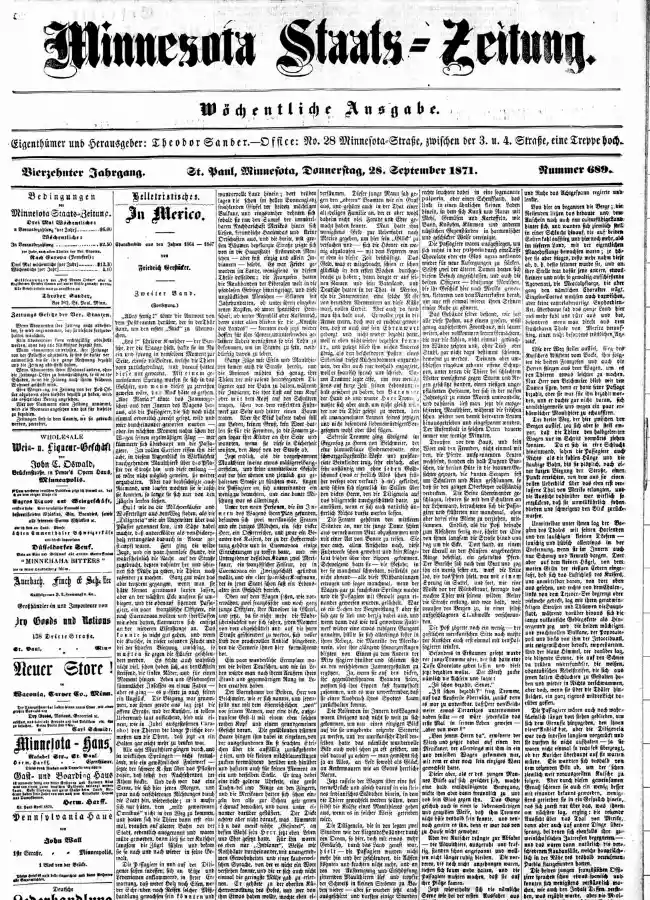 Minnesota Staats-Zeitung Newspaper from 1871
I went looking for the research base on this because I wanted to know whether the impulse to do any of it was just my own inherited homesickness wearing a parenting costume.
What the research actually supports
The evidence base for what researchers call ethnic-racial socialisation is large and broadly encouraging. The phrasing sounds academic. However, the meaning is simply "parents passing on cultural identity to children."
Meta-analytic work has found that this transmission is, on average, positively associated with children's psychosocial and behavioural adjustment. Further positives of academic motivation and engagement also come from the foundation of ethnic identity.
A separate meta-analysis of biculturalism, drawing on more than 23,000 participants, found that being competent in two cultural frames was significantly associated with both psychological and sociocultural adjustment.
More strongly, in fact, than orientation to a single culture, whether the dominant one or the heritage one. The child with two cultural frames does better, on average, than the kid pulled exclusively into either.
Research positively benefits a child with two cultural frames.
This comes with two important caveats. The strongest evidence comes from broader ethnic and biculturalism research rather than from German-specific studies, which remain comparatively thin. And not all transmission is equally helpful.
A longitudinal study across Germany, the Netherlands, Sweden, and the UK found that increased heritage-language use was associated with fewer behavioural and emotional problems (but only under supportive family conditions).
Warmth, cohesion, and low tension form the practical trinity of heritage transmission. Push too hard in a tense house, and the protective effect disappears.
The literature is friendly to heritage transmission. It is, however, friendly to a particular kind of child-centred, warm, and additive transmission.
So when you ask whether passing down German heritage is "worth the effort," the more accurate question becomes which version of the effort, and at what emotional temperature.
 The same story told again and again is additive
The trap worth avoiding
The unhelpful kind of heritage is what researchers describe, albeit gently, as compensatory transmission. The parent feels an ache about a culture they did not get enough of, or lost contact with, and the child becomes the container for that ache.
The traditions stop being for the child and start being for the parents' unfinished business. This tends to produce the exact outcome the parent feared in the first place. A child who experiences heritage as homework rather than identity, and pushes it away like brussels sprouts on any given Sunday.
Heritage should never become homework.
If you find yourself getting upset that your five-year-old is more interested in Peppa Pig than St. Nicholas, the issue is rarely the five-year-old. I say this as someone who has been the upset adult in that scene (banning Peppa Pig won't work either - ask me how I know).
The best way to make the most of this effort is for it to be additive to a child's life. It hands them more without making the rest of life heavier. More stories at bedtime, flavours at dinner, and genuine reasons to feel rooted.
The same evidence base that says heritage transmission helps is the evidence base that says it helps when the culture is offered, repeated, and not policed.
What you get from small, repeated actions
This is where the practical case becomes undeniable. The cheapest, lowest-friction forms of transmission are also the ones with the strongest support in the literature.
None of this requires fluency, money, or a plane ticket. All of it is supported by what the research says actually helps.
Family stories: Research on family narratives has consistently found that adolescents who know more about their family's past show higher emotional well-being and stronger identity, even after accounting for general family functioning.
You do not need a genealogy subscription to do this. You only need to know one or two real stories and tell them more than once. A short bedtime story of why your family eats what it eats, or where the photo on the shelf was taken, is doing measurable work.
I tell mine about visiting Berlin with their Oma. They have heard it at least eight times by now, and they will hear it again.
Repeated rituals: This is where parents can get it wrong. Explaining Oktoberfest with one line in October, browsing a Christmas article in December, or a Karneval article in February, each treated as a one-off. Heritage is transmitted through repetition. An annual lantern walk in November, an Advent calendar in December, or an Osterbaum (Easter egg tree) in spring.
If you want a structured way to start, my German family traditions page lays out the calendar without assuming you speak German or have ever been to Germany. The Christmas Eve in Germany and German Easter egg traditions pages give you specific foundational points to repeat each year.
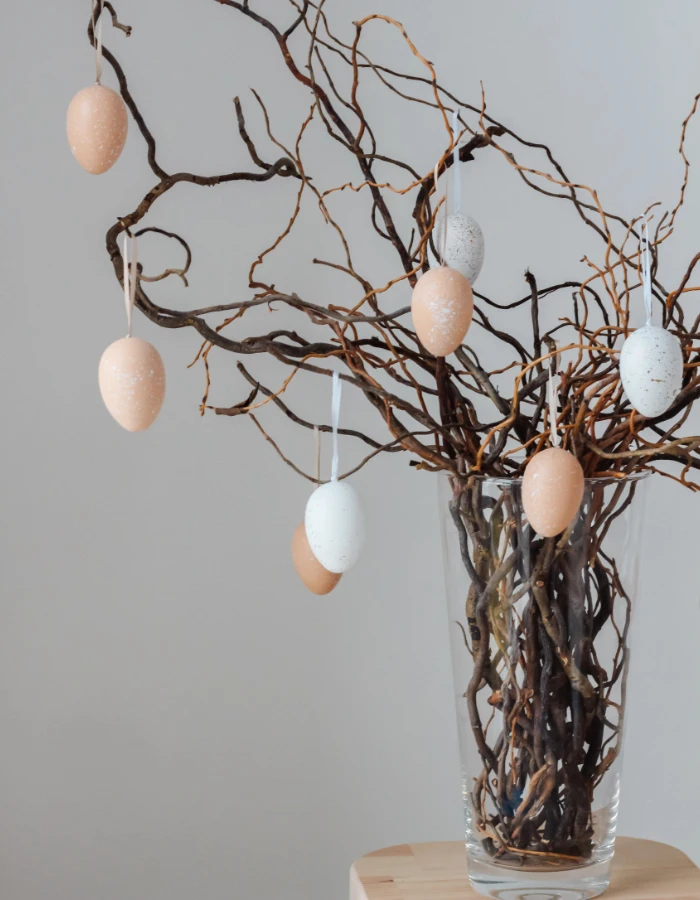 Repetition, not grand gestures
Modern family days: Muttertag sits on the same day as American Mother's Day, which makes for an unusually low-friction way to add a German layer to a day you were celebrating anyway.
Vatertag is tied to Ascension Day. This brings an extra Father's Day to German-Americans, which adds a layer of interest to the normal flow of sock-giving routine. Many parents underestimate how much of the German Muttertag and Vatertag is simply doing the things you already do, with different labels.
Story heritage: The Brothers Grimm collected the stories that half the world reads to its children, and most American kids have no idea those stories came from a single source.
Reading the history behind the Brothers Grimm, and then reading one of the original tales aloud, is roughly fifteen minutes of effort and reliable inheritance passed down.
I would strongly suggest reading them beforehand and determining if your child is old enough to handle the original story. They can be... intense.
A sense of who came from there: Famous Germans in history is the page my readers return to most often, because "people who did things" is one of the easier ways for a child to attach an abstract country to something concrete.
What "worth it" looks like in practice
Here is the test I use on myself. At the end of a year, can my children point to two or three things they associate with being part-German that they actually enjoy? It could be a story, a song, or even a side dish (hello, dumplings). A specific date on the calendar might be a bit of a stretch if they barely know the days of the week.
If I can say yes to even one of those, then I am well past the threshold of positivity that the evidence supports. However, if it feels like a homework regime instead, I'm doing it wrong, and the fix is to give a bit of breathing room.
The defensible bottom line is that passing down German heritage in North America is worth the effort when the goal is a durable layer of belonging rather than a total identity.
The high-return version is some contact with the language if it is feasible, a family narrative the child can inhabit, and a handful of rituals they will repeat with their own children if they want to.
The version of heritage that drains everyone is the attempt to resurrect a thick old-world culture that no longer lives in your house.
The first is undeniably worth doing. The second is what makes the question feel exhausting in the first place.
Common questions about passing down German heritage
I'm German on one side. My partner isn't. Does that change anything?
I'm German on one side. My partner isn't. Does that change anything?
Yes, but not in the direction most parents fear. Biculturalism research suggests kids do well when given real competence in two cultural frames, which is exactly what a mixed-culture household is set up to provide.
The mechanic to watch is balance. If the German layer becomes a covert competition with the other parent's culture, the child notices and disengages from both. Offer it as one of two rooted things in the house. Equal weight, equal warmth.
At what age should I start?
At what age should I start?
Earlier, and lighter, than you think. Research suggests children begin processing cultural input from around age two, which probably matches your parental instinct anyway.
The small versions work earlier than the big ones, which means a song at bath time can carry as much weight at age two as a tradition explanation will at age six. By eight or nine, the child is usually asking their own questions, and the work shifts from your effort to their curiosity.
What if my child isn't interested?
What if my child isn't interested?
Most kids are not interested in heritage at the exact moment a parent wants them to be. They are interested in Pokémon or Minecraft or whatever the household is currently watching. The trick is to keep offering at low cost without grading the response.
A repeated ritual gets internalised long before it gets enthusiasm, and the enthusiasm usually arrives in the next decade rather than this one. I have lost this argument in our house more than once. The answer is almost always to do less and to keep doing it.
Do I need to speak German to do any of this?
Do I need to speak German to do any of this?
No. The whole German at Heart project is built around the assumption that you don't, and the research broadly agrees that family stories, repeated rituals, and identity transmission do most of their work in whatever language the household actually uses.
Adding a few German words, songs, or food names helps where you can manage it. Going without doesn't disqualify the project. It just changes what the project is for.
Do we have to wait for German-American Heritage Month in October?
Do we have to wait for German-American Heritage Month in October?
No, and waiting tends to be the wrong instinct. Heritage Month is a fine excuse to do something extra in October, but the research is clear that repetition matters more than calendar significance.
A modest tradition you do every month carries more weight than a single elaborate October event. Treat the month as a top-up to a year-round rhythm.
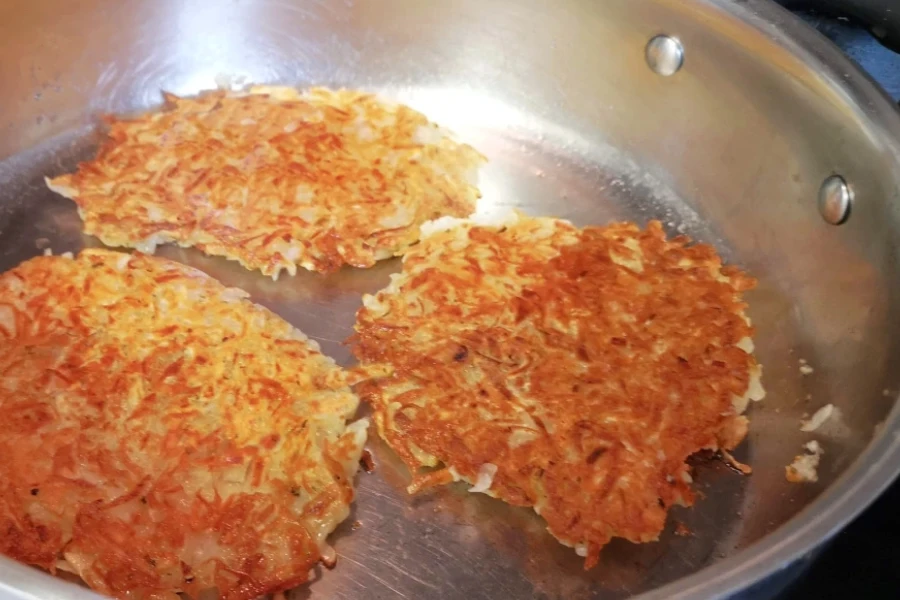 Passing down heritage also fills empty bellies
What to do this week
Pick one thing from the list below and let the rest go.
- Tell one family story at bedtime. The same story, three times in a week.
- Add one German element to a meal you were going to make anyway. A potato pancake, an apple cake, anything.
- Mark one date on the calendar. Muttertag, Easter egg painting, or Christmas Eve is enough to start.
- Read one Grimm story (age-dependent) before its Disney version. Then talk about which one your child preferred and why.
If this is the kind of project you want a small amount of help with, the Heimweh Letters is my free weekly newsletter for parents doing exactly this work. It's one tradition, story, or practical idea at a time. Nothing complicated, no fluency required, and the unsubscribe button is one click away.
It is worth the effort, in the size you can sustain.
Notes on Research
The article synthesises findings from several established research literatures. The most directly cited sources are listed below, grouped by topic. Where information extrapolates to German-American families specifically, the extrapolation is identified as reasonable inference rather than direct evidence, because German-specific empirical work remains comparatively limited.
Census data. US Census Bureau, 2022 American Community Survey. The 41.1 million figure is the largest reported single ancestry that year.
Ethnic-racial socialisation. Hughes et al. (2006), "Parents' Ethnic-Racial Socialization Practices: A Review of Research and Directions for Future Study," in Developmental Psychology. Wang et al. meta-analyses on psychosocial and academic outcomes. Rivas-Drake et al. (2014) in Child Development.
Biculturalism. Nguyen and Benet-Martínez (2013), "Biculturalism and Adjustment: A Meta-Analysis" (23,000+ participants), in Journal of Cross-Cultural Psychology. John Berry's foundational acculturation framework. Colleen Ward's 2024 re-examination of effect sizes.
Heritage language under family conditions. Oh and Fuligni (2010), "The Role of Heritage Language Development in the Ethnic Identity and Family Relationships of Adolescents from Immigrant Backgrounds," in Social Development. A 2023 longitudinal study across Germany, the Netherlands, Sweden, and the United Kingdom on heritage-language use moderated by family climate.
Family narrative and identity. Research from the Fivush and Duke laboratories on family stories, the "Do You Know" scale, and adolescent emotional well-being.
German-American identity (sociology and history). Herbert Gans, "Symbolic Ethnicity" (1979). Mary Waters, Ethnic Options (1990). David Hollinger, Postethnic America (1995). Kathleen Neils Conzen's work on German-American history. Russell Kazal, Becoming Old Stock (2004).
Living institutions referenced. Goethe-Institut USA. American Association of Teachers of German (members in all 50 states, 60 local chapters). Max Kade institutes. German International School Washington, D.C.
Synthesis is the article's responsibility. The underlying findings are the cited authors'.

Eran Fulson
Keeping German heritage alive across an ocean and a generation.
Eran Fulson is Canadian-born, Welsh by choice, and German at heart. A diaspora son raising kids in Wales further from German heritage than his parents were from theirs, he runs German at Heart for families doing the same thing. He writes from his own family's story, with real sources behind every guide. He co-founded Tour My Germany with his mom (Just Like Oma) and his niece Lydia, drawing on 15+ years exploring Germany from Hamburg to Bavaria. Heimweh Letters, his newsletter, reaches thousands of subscribers every week.
did you know?
Over 800 million currywursts are eaten each year in Germany, and 70 million in Berlin alone.

Words to live by
Think of all the beauty still left around you and be happy!
- Anne Frank
Discover our Just Like Oma family of websites:




Across media platforms, the Just Like Oma family of websites are celebrated for making German cooking, travel, and heritage fun & simple to understand, and easily accessible for everyone!


















Thanks for visiting German at Heart!
I created this space to rediscover, celebrate, and pass on the parts of our culture that matter most. Things I learned from my parents, who you may know as Oma Gerhild and Pastor Wolle.
My hope is that this becomes a place where you can reconnect with your roots, share stories, and keep the spirit of family and tradition alive.
I invite you to follow along on social media as I share ideas, inspiration (and a few fun surprises along the way) as we continue exploring what it means to be German at heart!
Cheers!


Copyright © | German at Heart (Just like Oma) | A Fulson Media Group Inc. Brand | All Rights Reserved
Powered by: Make Your Knowledge Sell!
AFFILIATE DISCLOSURE: German at Heart is a brand of Fulson Media Group Inc., which participates in various affiliate advertising to provide a means to earn advertising fees by linking to retail websites. Additionally, this website is a participant in the Amazon Services LLC Associates Program, an affiliate advertising program designed to provide a means for sites to earn advertising fees by advertising and linking to amazon.com and affiliated sites. We do not promote products we do not own or would not buy ourselves. Our goal is to provide you with product information and our own personal opinions or ideas. At times, we will showcase services, programs, and products. We aim to highlight ones that you might find interesting, and if you buy future items from those companies, we may get a small share of the revenue from the sale. We are independently owned and the opinions expressed here are our own.
PHOTOGRAPHY: Throughout this site, you'll find mostly photos that we've taken. We also feature some reader-contributed images and curated stock IMAGES BY Deposit Photos and others, offering further perspectives on all things German.
YOU SHOULD ALWAYS PERFORM DUE DILIGENCE BEFORE BUYING GOODS OR SERVICES ONLINE.