Famous Germans in History: Leaders to Poets and More
By: Eran Fulson / Last Updated: February 20, 2026
Germany isn’t just castles and Christmas markets. It’s also the people who shaped the music you hear, the stories you grew up with, and a lot of the ideas modern Europe argues about.
This page is a list of famous Germans in history, with enough detail to learn something that doesn't feel like a history class. From music to storytelling, or philosophy to inventors, these Germans didn't just change Germany - they left their mark on the world.


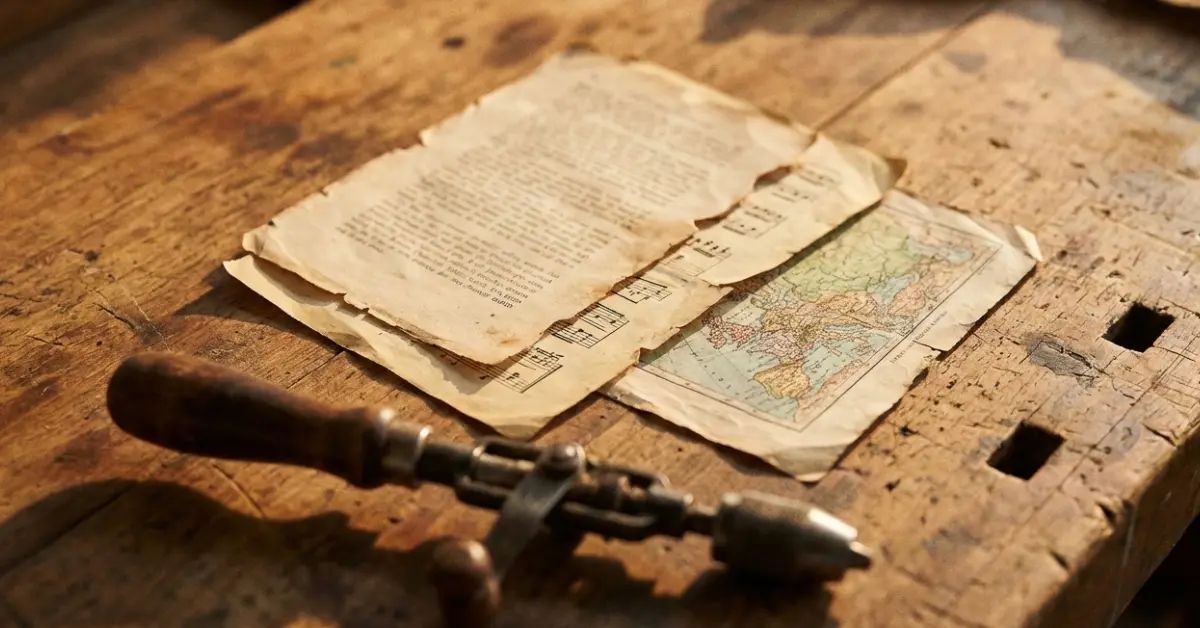 Across all fields, famous Germans left their fingerprints.
Table of Contents:
Rulers & Leaders
Germany’s early history isn’t one neat country story. It’s a mix of kingdoms, empires, and regions that didn’t always agree on who was in charge. These rulers matter less because you need to memorize dates, and more because their choices shaped the places, symbols, and “Germany” references you still bump into today.
Ludwig II of Bavaria (1845–1886)
Ludwig II became king at 18 and quickly grew more interested in art, theatre, and fantasy than day-to-day government. He poured his private royal income into grand building projects. Most famously Neuschwanstein, plus Linderhof and Herrenchiemsee.
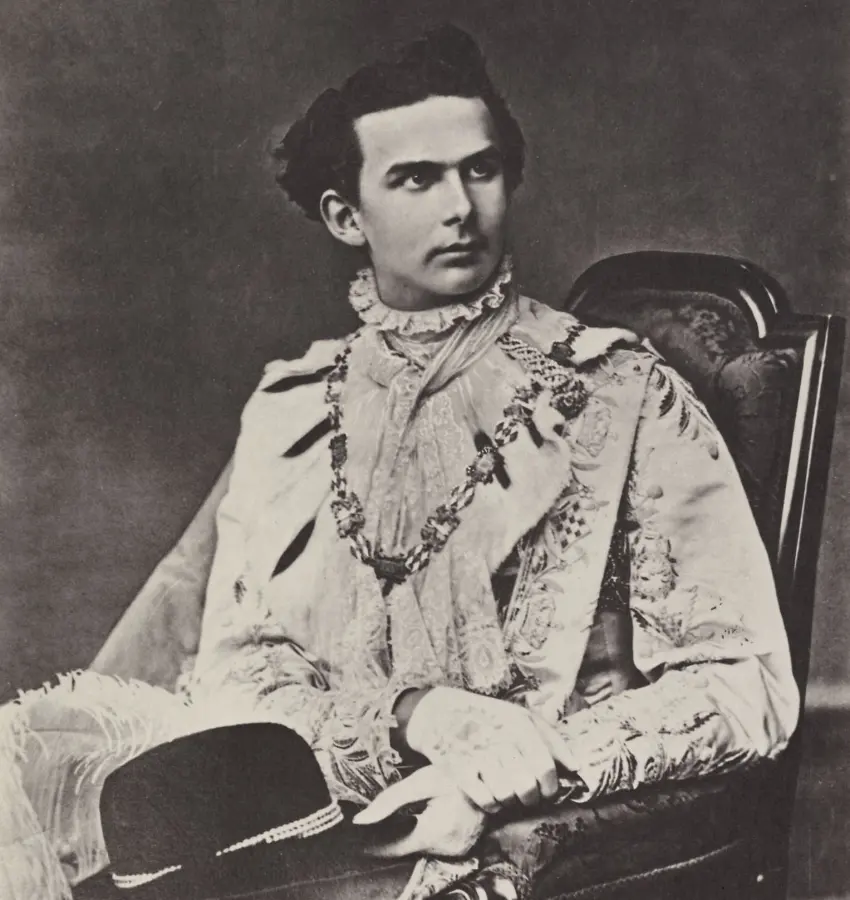 Ludwig II of Bavaria, King of Bavaria.
He was also a major patron of composer Richard Wagner. His death in Lake Starnberg in 1886 is still discussed because the circumstances were strange and contested.
They’re often discussed in the same breath as UNESCO World Heritage sites, thanks to their cultural impact and global fame.
Additionally, Ludwig II also commissioned the construction of the Ludwigsbahn railway, the first railway built in Germany. It was only 3.7 miles long, but it started a German engineering legacy that would become its global calling card.
Read more about the cultural legacy of Ludwig II.
Try this
Build a pillow “castle” and name it Schloss *XYZ. Finish it off with a "royal flag" from paper; obviously, they'll colour it in.
Schloss = Castle/Palace.
*XYZ = their name, a color, or an activity. Schloss Teddy, Schloss Blue, Schloss Jump, etc.
Frederick the Great (Friedrich II of Prussia) (1712–1786)
Frederick ruled Prussia from 1740–1786 and turned it into a major European power. Partly through war, partly through reforms.
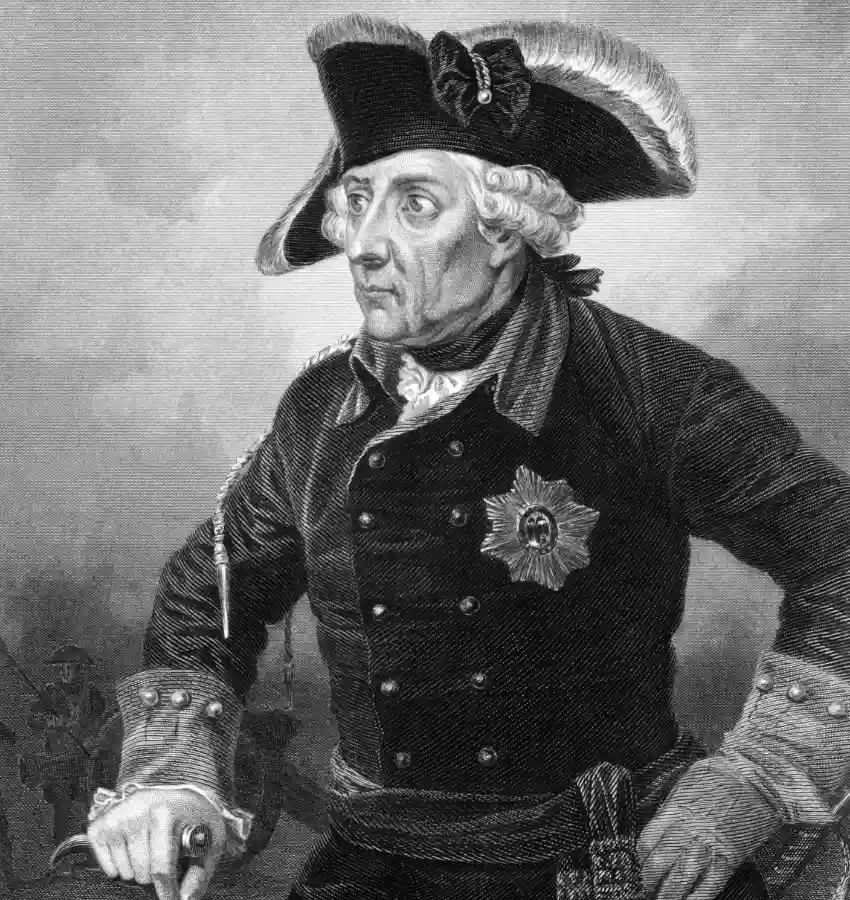 Frederick II of Prussia, Prussian king known as Frederick the Great.
He’s often described as an “enlightened absolutist.” Frederick was a king who believed in reason, administration, and modernization (while still being very much… a king).
He built the Sanssouci Palace in Potsdam as a private retreat and invited big thinkers like Voltaire into his orbit. If your kids ever hear “Prussia,” this is usually the guy in the background.
Try this
Make a “royal decree” for bedtime/house rules and stamp it with a homemade crown seal (potato relief carving and paint work well for this).
Louis IV, Holy Roman Emperor (Ludwig der Bayer) (1282–1347)
Louis IV is your reminder that “Germany” used to be a web of duchies, princes, and church power plays.
He was elected king in 1314 in a disputed election, fought for legitimacy (including winning a decisive battle at Mühldorf), and later became Holy Roman Emperor.
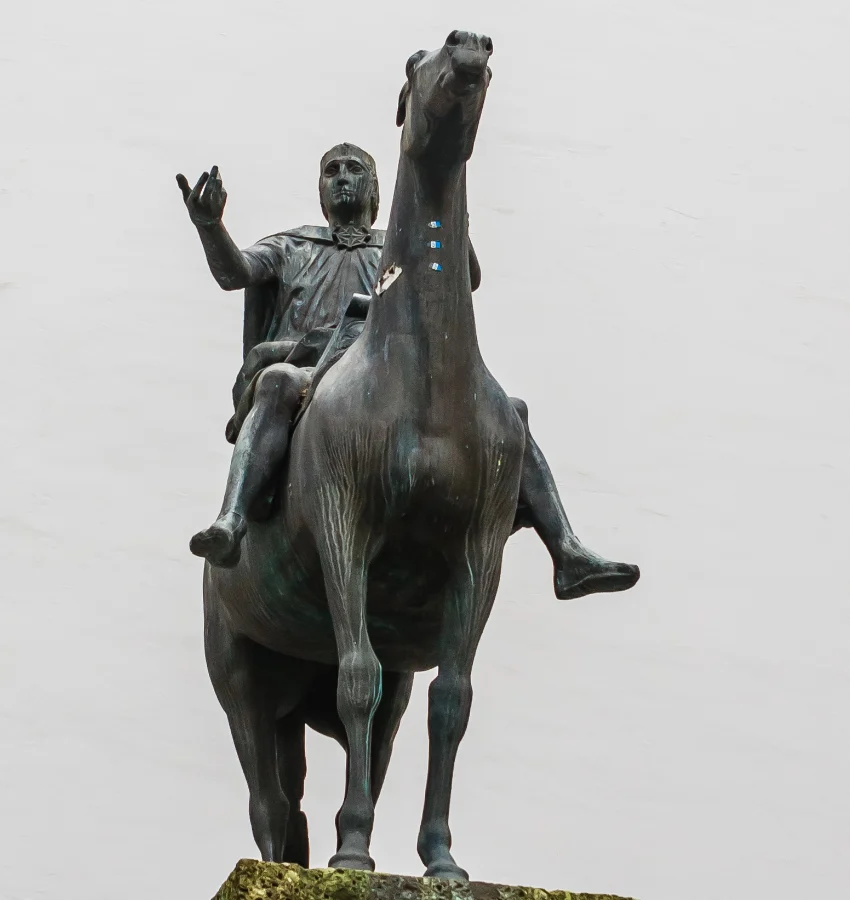 Statue of Louis IV on horseback, a well-known German royal figure.
He clashed hard with Pope John XXII and even supported an “anti-pope,” which tells you everything you need to know about medieval politics.
This is a great name for explaining to kids that Europe’s borders and titles weren’t always neat.
Composers and Musicians
German-speaking Europe produced an unfair number of composers who became the backbone of “classical music.” You don’t need to know the theory or the playlist.
These names show up everywhere (school concerts, movie soundtracks, holiday music), and they’re an easy way to identify cultural familiarity without doing anything complicated.
Ludwig van Beethoven (1770–1827)
Beethoven was born in Bonn and moved to Vienna as a young man, where he became one of the most important composers in Western music. Sadly, he experienced worsening hearing loss while writing some of his biggest works.
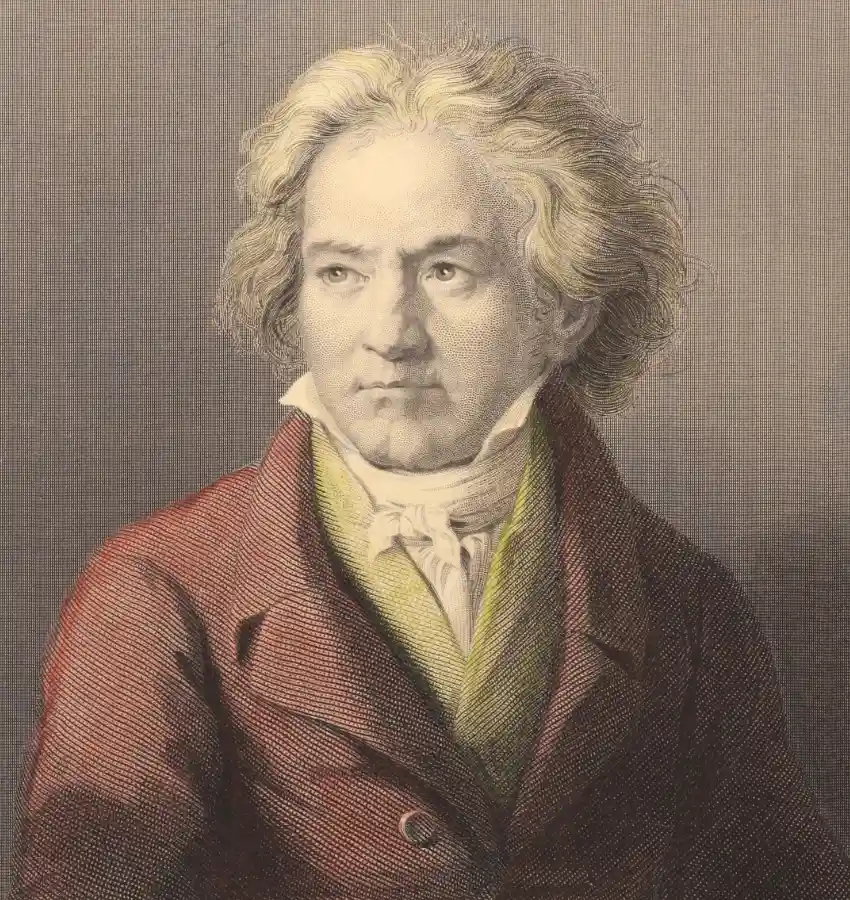 Ludwig van Beethoven, German composer of the Classical era.
His Ninth Symphony (premiered in 1824) ends with a choral finale using Schiller’s Ode to Joy, which is why people still recognize it even if they don’t “do classical music.”
Beethoven is the poster child for stubborn creativity under awful conditions.
Read more about Beethoven's life here.
Try this
Play one movement while you do chores. Call it “German music time” and see how quickly they get things done.
Johann Sebastian Bach (1685–1750)
Bach was a late Baroque composer and working musician who wrote mountains of music for church and royal courts. He spent his final working years in Leipzig as Thomaskantor, responsible for music at major churches and for training singers.
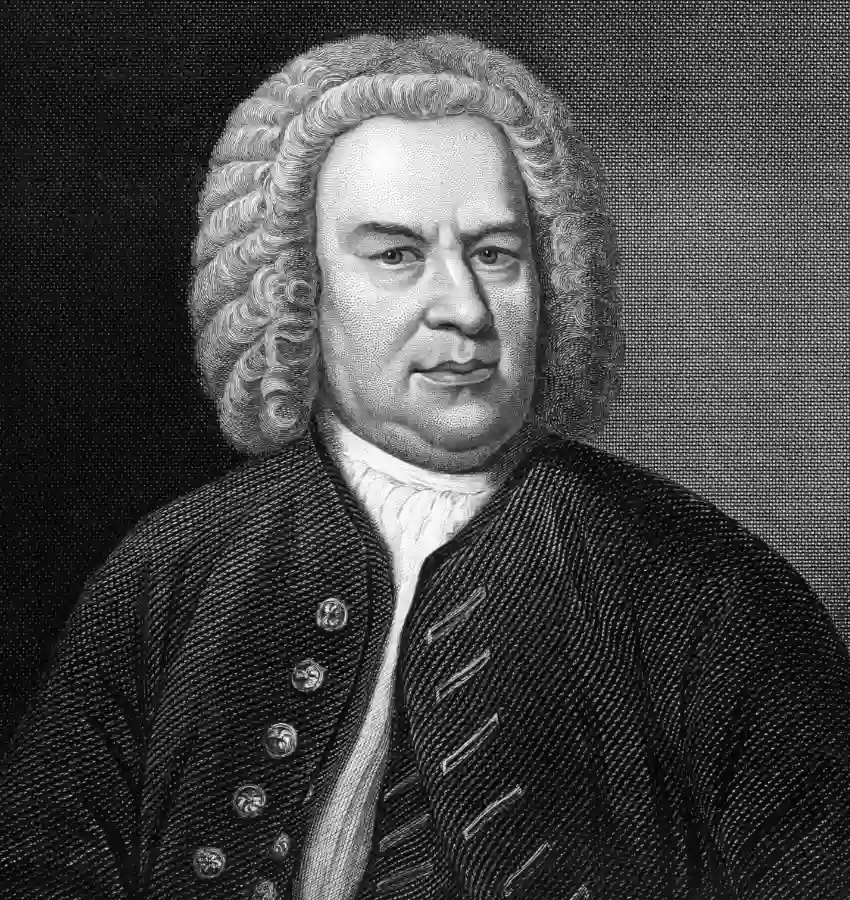 Johann Sebastian Bach, German Baroque composer and organist.
If you’ve heard the Brandenburg Concertos, The Well-Tempered Clavier, the St Matthew Passion, or the Mass in B Minor, you’ve met Bach already. He’s also part of a giant musical family. The “Bach” name meant “musician” in parts of Germany because there were so many of them.
Felix Mendelssohn (1809–1847)
Mendelssohn was a composer, pianist, and conductor. One reason he matters beyond his own pieces is that he sparked a wider revival of Bach’s music in Europe.
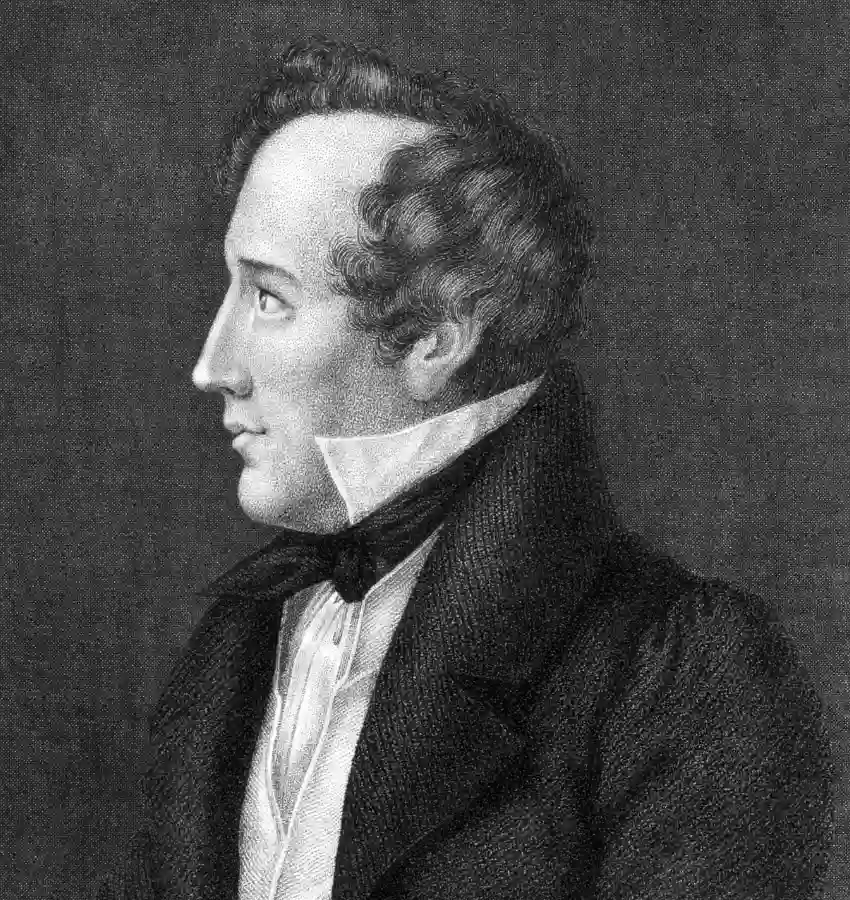 Felix Mendelssohn Bartholdy, German composer and conductor.
In 1829, he conducted a major performance of Bach’s St Matthew Passion, which helped push the fact that Mendelssohn didn’t just write music, he helped decide what later generations would remember.
To say he was one of the first to make it big doing covers would cheapen his accomplishments. However, in other news, the sky is also blue.
try this
Let your child “conduct” with a spoon while music plays. Dramatic wrist flicks encouraged.
Johannes Brahms (1833–1897)
Brahms grew up in Hamburg and later built his career in the German-speaking music world (especially Vienna). He’s known for music that feels sturdy and emotionally loaded at the same time.
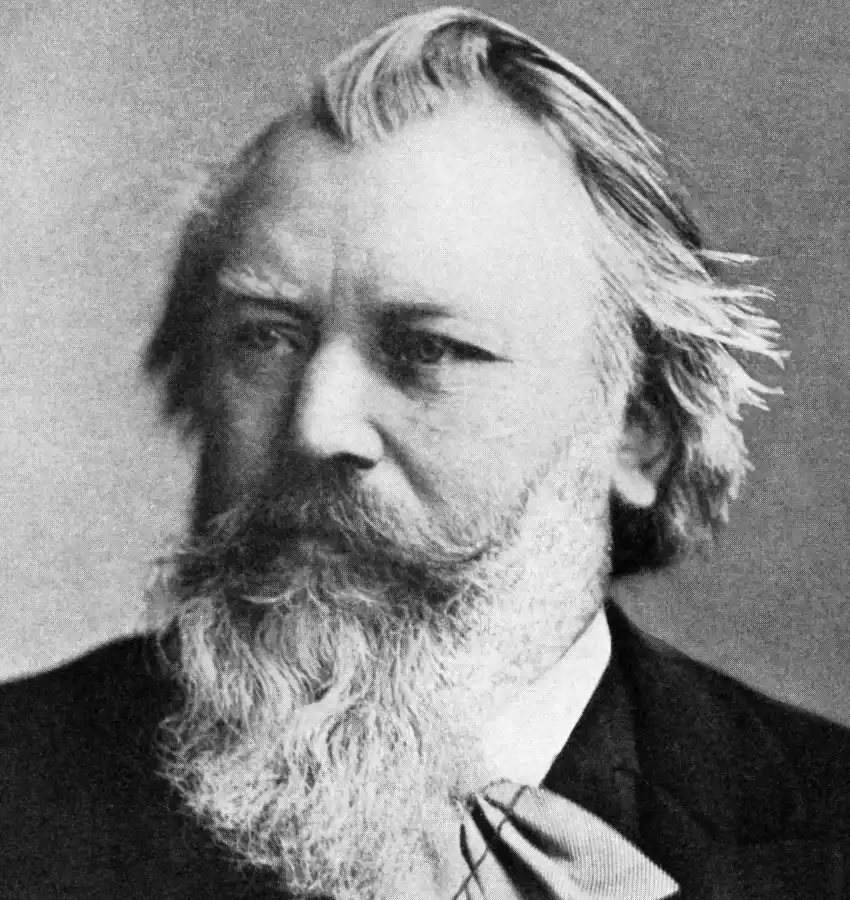 Johannes Brahms, German Romantic-era composer.
His A German Requiem is notable because it’s not the traditional Latin mass; it uses German biblical texts and focuses more on comfort for the living than fear for the dead. The final seven-movement version premiered in 1869.
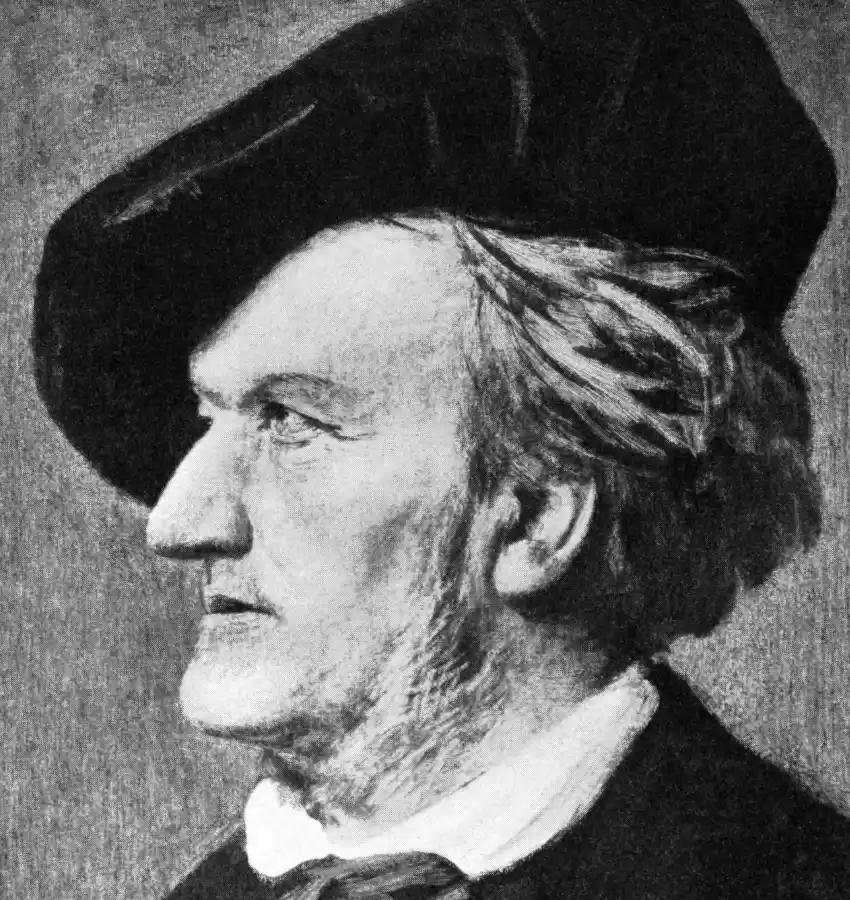
Richard Wagner (1813–1883)
Wagner wrote giant operas (he called them “music dramas”) and built an entire ecosystem around them.
His four-opera cycle Der Ring des Nibelungen premiered as a full cycle in 1876 at the purpose-built Bayreuth Festspielhaus, a theatre designed for his sound and staging ideas (including that hidden orchestra pit).
Wagner’s influence on opera and film-style musical storytelling is huge… even if you never voluntarily sit through the whole Ring.
However, Wagner does not arrive without controversy.
His biggest stain is his outspoken antisemitism, including a published essay attacking Jewish musicians that still shapes how people judge his legacy. His private life also drew heat, especially his affair with Cosima von Bülow while she was married to his conductor, Hans von Bülow.
He lived in near-constant debt and leaned heavily on wealthy patrons, most famously King Ludwig II of Bavaria. After his death, his music and the Bayreuth circle were later embraced by the Nazis, which added another layer of controversy around performing and celebrating his work.
Writers and Storytellers
If your kids know fairy tales, they’ve already met German culture. This section is about the writers who shaped German storytelling, from folk tales to big literature to real-life history told through one person’s words.
Johann Wolfgang von Goethe (1749–1832)
Goethe is often treated as Germany’s literary heavyweight. He was a poet, playwright, novelist, and also a working public official in Weimar.
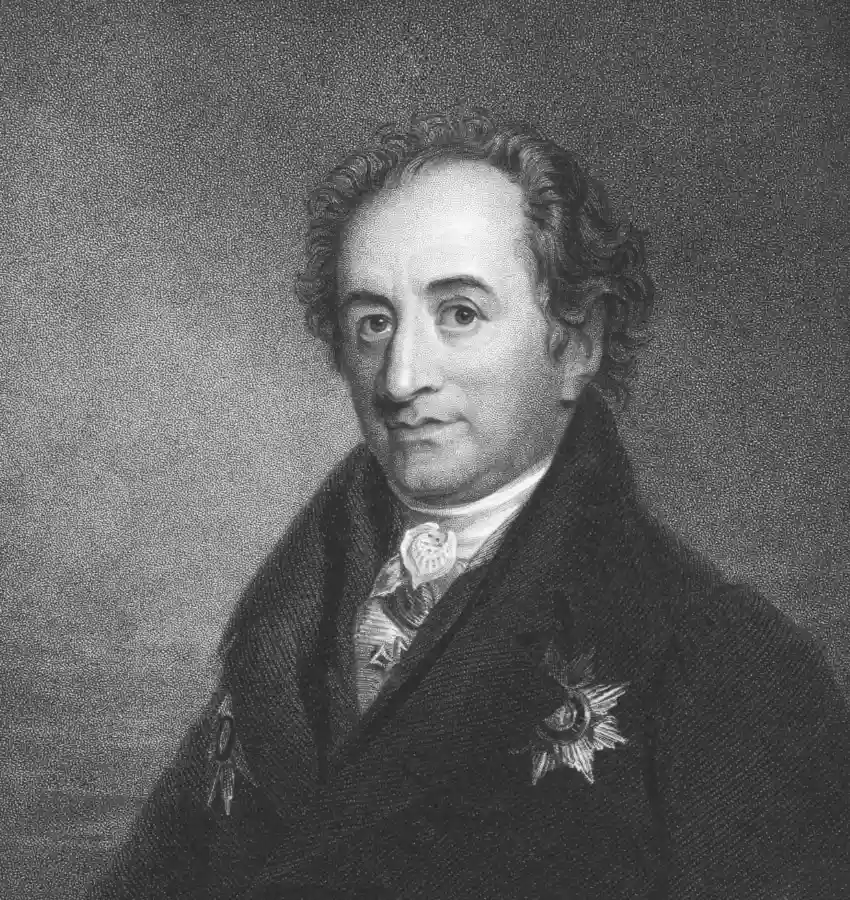 Johann Wolfgang von Goethe, German writer, poet, and statesman.
His early novel The Sorrows of Young Werther (1774) became a European sensation, and his lifelong project Faust is a two-part drama. Part I was published in 1808, followed by Part II after his death.
Goethe is useful for heritage teaching because he shows kids that German culture isn’t just “old castles. It’s ideas, language, and storytelling power.
The Brothers Grimm (Jacob & Wilhelm Grimm)
The Grimms didn’t “invent” fairy tales; they collected and edited folk stories. Their first entry was Kinder und Hausmärchen, starting in 1812. Over time, the collection expanded (eventually around 200 tales) and became foundational to Western children’s literature.
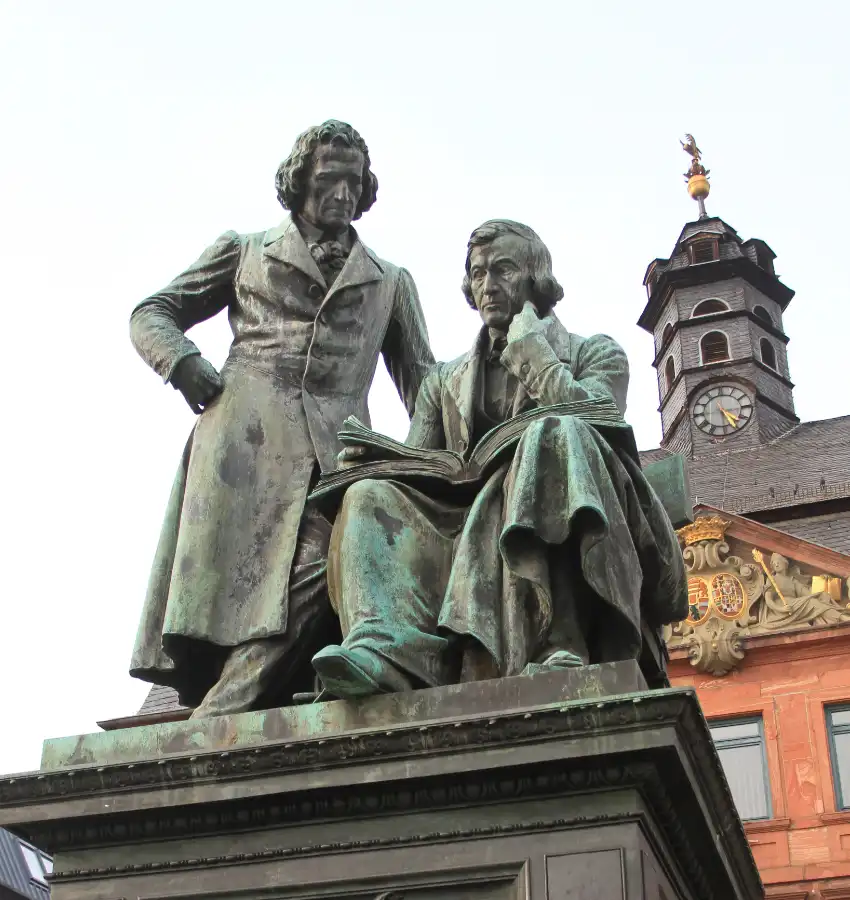 Jacob Grimm and Wilhelm Grimm, known for collecting and publishing German fairy tales.
Many stories were darker in early forms than modern Disney versions, which is a nice parental reminder that “kid-friendly” is negotiable. Their work also reflects a 19th-century push to document language and culture. This turned into equal parts storytelling and cultural preservation.
Discover more about the real lives of the Grimms behind the fairy tales here.
Try this
Read one tale and ask, “What would you change?” Kids are brutally honest editors.
Annette von Droste-Hülshoff (1797–1848)
Droste-Hülshoff is one of the major German writers of the 19th century, and she didn’t write “light.”
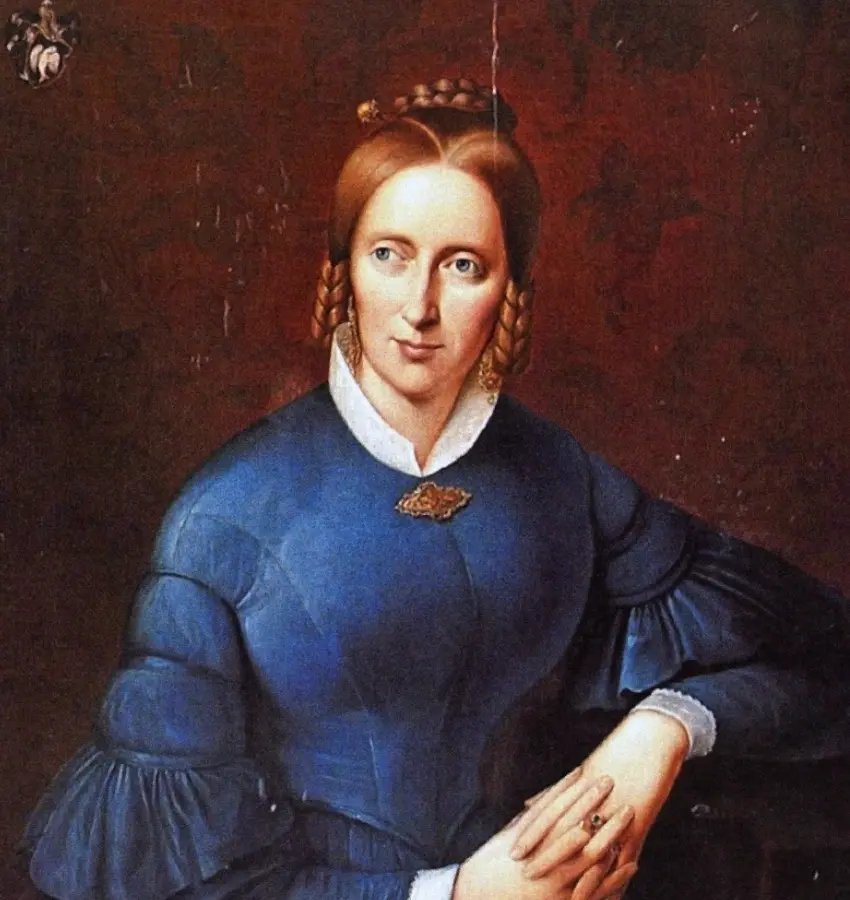 Annette von Droste-Hülshoff, German poet and author.
Her best-known work, Die Judenbuche (1842), is a short, tense novella set in rural Westphalia that blends social realism with mystery and moral fallout (and it draws from real events). If Goethe is the big monument, Droste-Hülshoff is the sharp, eerie room you walk into and immediately whisper.
Try this
Write a two-line “mystery poem” about something missing (a sock, a toy). Keep it silly.
Anne Frank (1929–1945)
Anne Frank was a German-born Jewish girl who hid with her family in Amsterdam during the Nazi occupation and wrote the diary that became The Diary of a Young Girl.
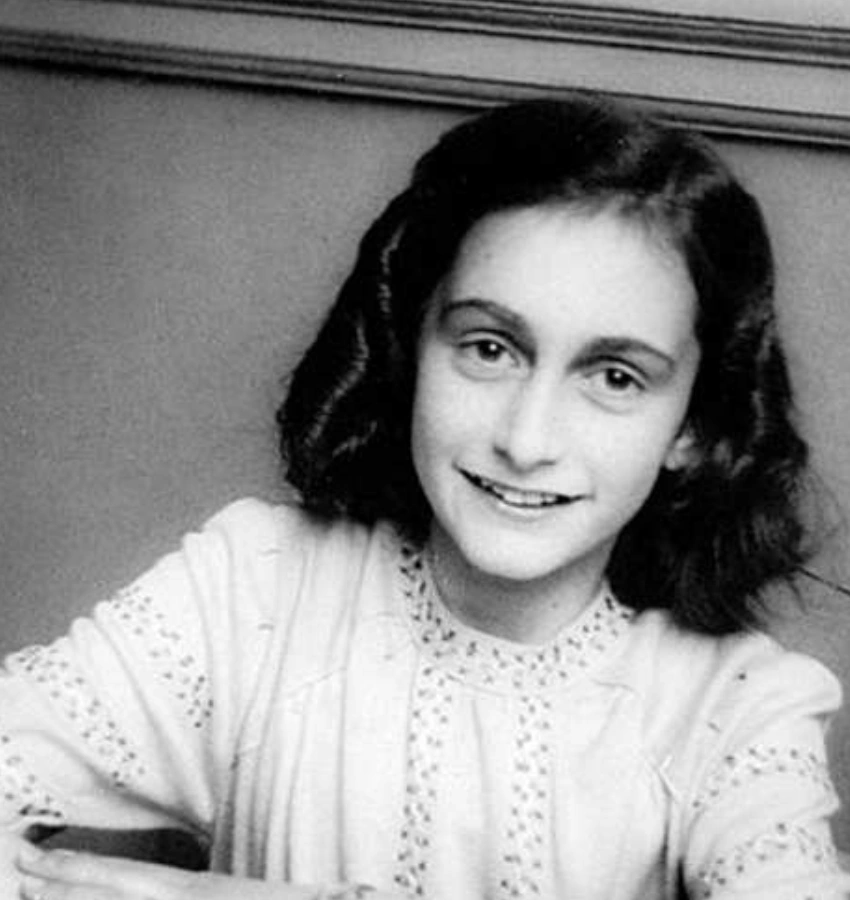 Anne Frank, German-born diarist whose writing became widely read.
After the family was arrested in 1944, Anne died in Bergen-Belsen in 1945. Her diary was first published in 1947, and it’s now one of the most widely read personal accounts of the Holocaust.
For this section, handle it gently and age-appropriately. Anne Frank is essential history, but you don’t need to dump the full horror on a six-year-old.
Try this
Start a “family memory notebook.” One or two happy lines each week. No heavy details required.
Thinkers & Big Ideas
This is the “parent” section, but kids can still get the short version. German thinkers helped shape how modern people argue about fairness, truth, society, and meaning.
You don’t need to teach philosophy. You just need one sentence that turns “a famous someone-or-other” into an idea your child can use: fair rules, sharing, choices, and what to do when life is hard.
Immanuel Kant (1724–1804)
Kant lived his whole life in Königsberg (then Prussia) and still managed to reshape philosophy across Europe. His Critique of Pure Reason (1781) asked what we can actually know, and what our minds add to experience.
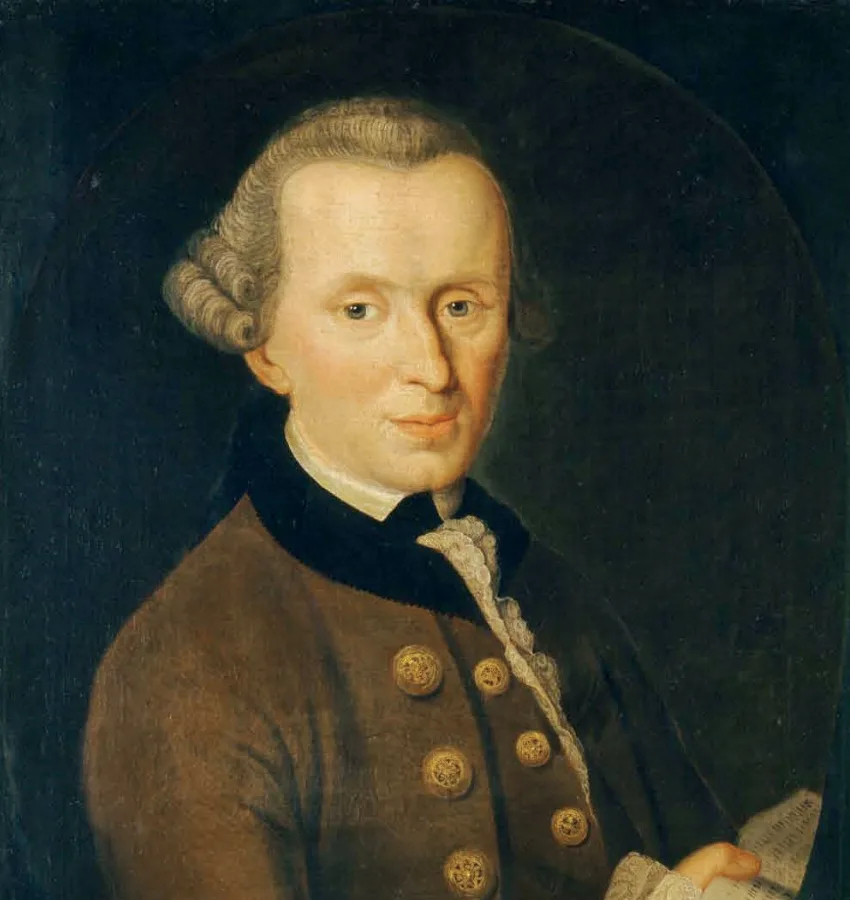 Immanuel Kant, German Enlightenment philosopher.
In ethics, he’s famous for the categorical imperative. It's the idea that morals should be based on principles you’d be willing to apply universally (not on “because I feel like it”). In plain parent terms, Kant is the guy behind “rules should be fair for everyone.”
Friedrich Nietzsche (1844–1900)
Nietzsche was a late-19th-century philosopher and cultural critic who attacked comfortable moral certainty and pushed ideas about creativity, values, and “life-affirmation.”
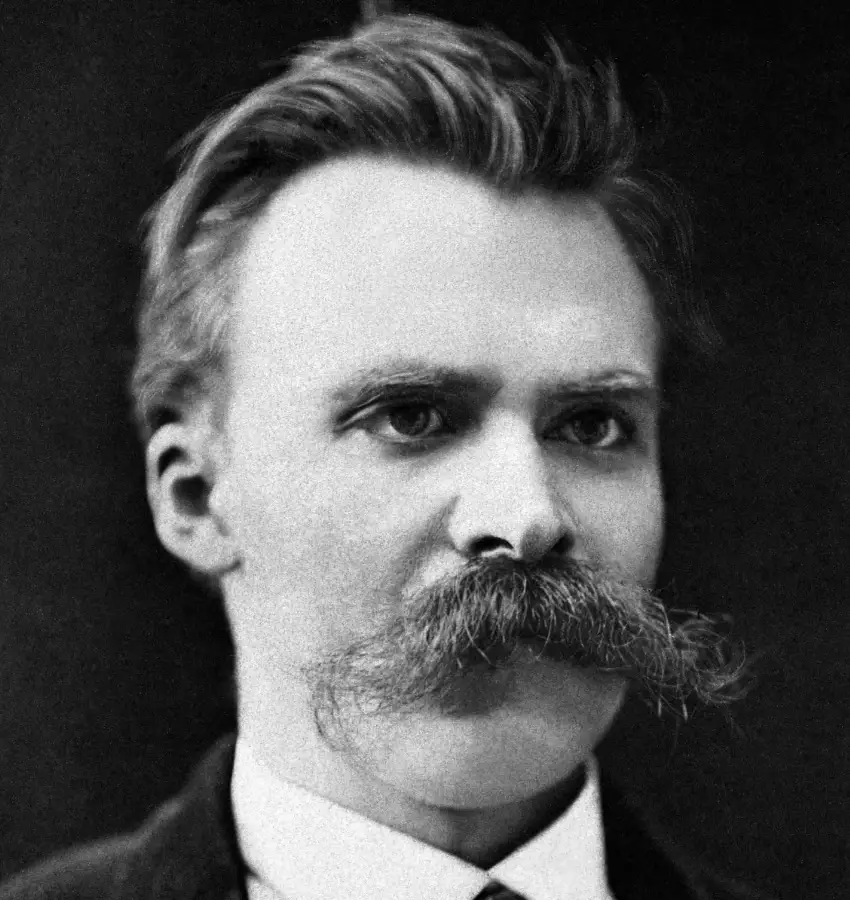 Friedrich Nietzsche, German philosopher and cultural critic.
Works often linked to him include Thus Spoke Zarathustra and Beyond Good and Evil. After his collapse in 1889, he couldn’t manage his own work; later, his ideas were appropriated and distorted, including by Nazi-era propaganda, helped along by how his estate was handled. When people say “Nietzsche = Nazis,” they’re usually talking about misuse, not a direct line of belief.
parent only
If you mention him at all, keep it to “a thinker people argue about.” The complexities and sensitivities associated with Nietzsche can be a heavy topic for children to discuss or debate until they're older.
Karl Marx (1818–1883)
Marx was born in Trier and became one of the most influential (and controversial) political thinkers in modern history.
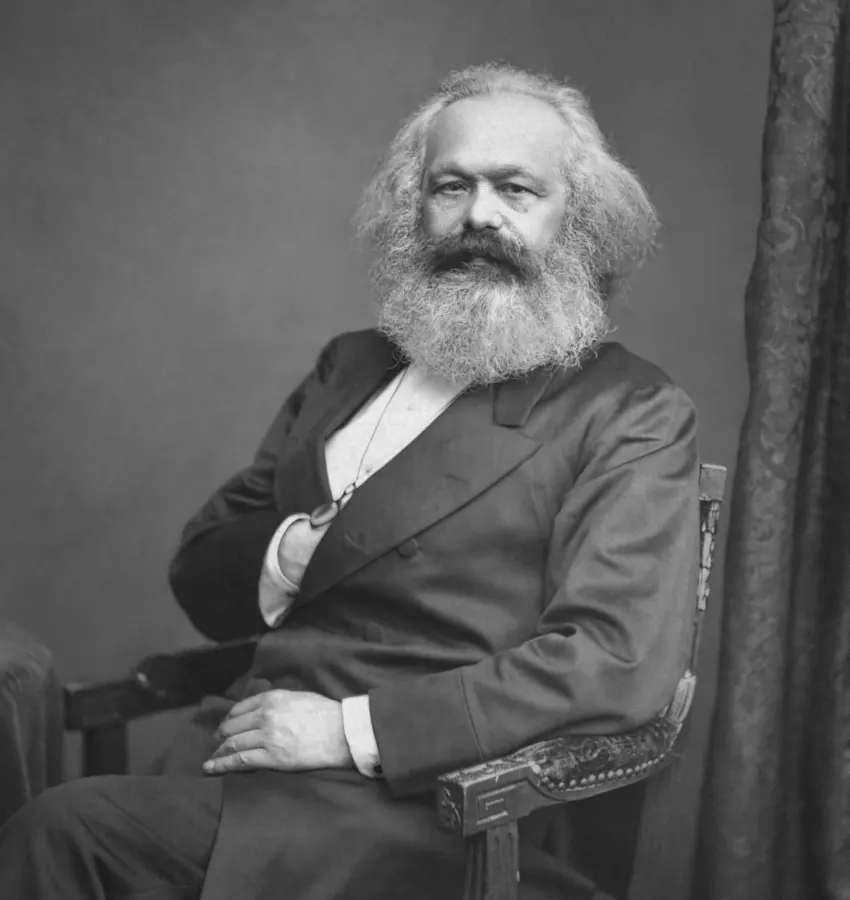 Karl Marx, German philosopher and economist.
With Friedrich Engels he wrote The Communist Manifesto in 1848, and later produced Das Kapital (Volume I published in 1867), a dense critique of capitalism and how wealth and labor function in industrial society. Whether people agree or disagree, Marx shaped global political movements for the next century and beyond.
Arthur Schopenhauer (1788–1860)
Schopenhauer’s central work The World as Will and Representation first appeared in 1818/1819, and it’s where his reputation for pessimism comes from.
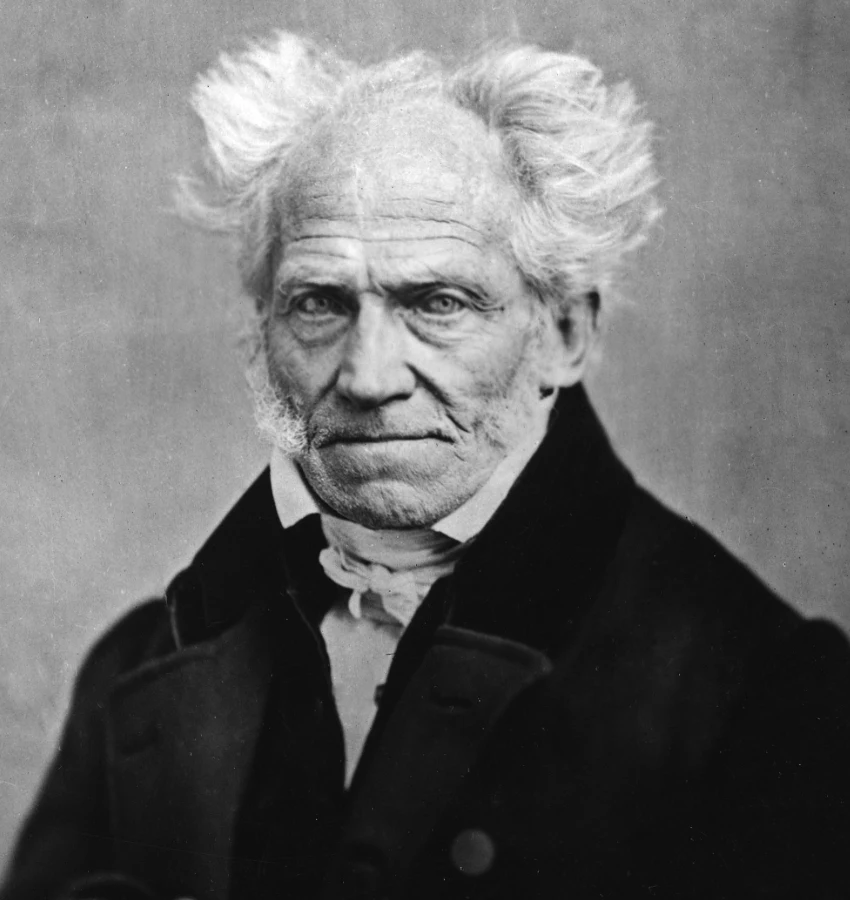 Arthur Schopenhauer, German philosopher.
He argued that humans are driven by a restless “will” that keeps us wanting, chasing, and rarely satisfied. Cheerful stuff.
But he also influenced later writers and thinkers (including Nietzsche) and helped push Western interest in art, music, and sometimes even Eastern philosophy as a relief from the endless wanting.
Inventors & Builders
German history isn’t only art and books. It’s also a very practical streak: printing, engineering, tools, and systems. These inventors matter because their work changed everyday life.
They impacted how information spreads, how people travel, and how work gets done. For heritage teaching, this section is great because it turns into hands-on “make and test” activities fast.
Johannes Gutenberg (c. 1390s–1468)
Gutenberg is associated with making printing practical at scale in Europe through a mechanized press and reusable movable type. Around 1455, his workshop produced the famous Gutenberg Bible, one of the earliest major books printed from movable type in Europe.
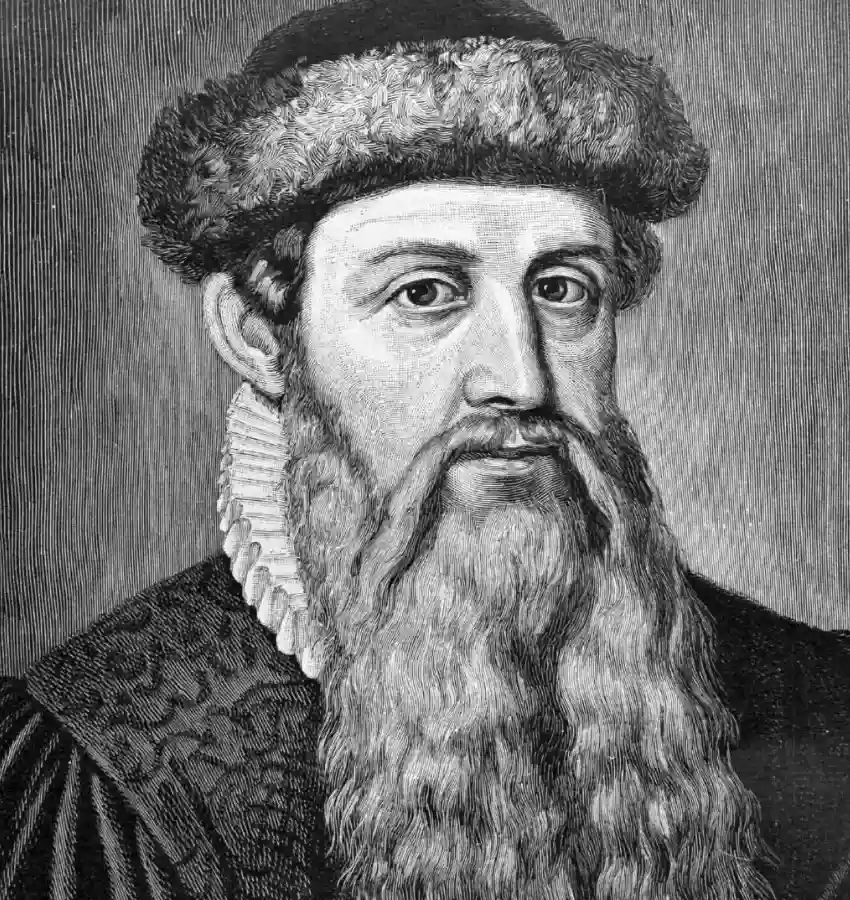 Johannes Gutenberg, printing pioneer linked to movable-type printing in Europe.
The biggest impact printing made wasn't just making books cheaper, it made ideas harder to control. As a result, ideas were easier to spread and faster to argue about. That’s basically the internet, but with ink.
Karl Benz (1844–1929)
Karl Benz built and patented the Benz Patent-Motorwagen in 1886, widely regarded as the first practical automobile put into production.
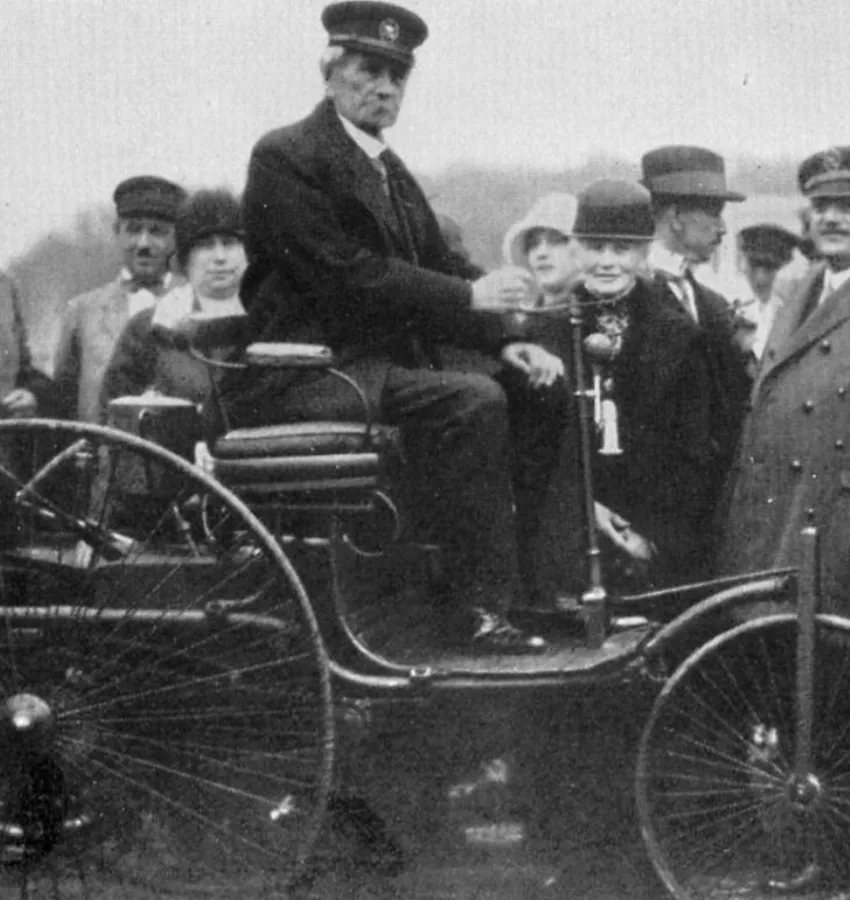 Karl Benz pictured with an early motorcar.
The best story behind the automobile isn’t Karl, it’s Bertha Benz. She took the vehicle on a long-distance trip in 1888 to prove it worked in real life (and to create publicity). That trip helped push the invention from “engineering experiment” toward “actual product.”
The automobile story continued when Karl Benz’s company and Gottlieb Daimler’s company later merged in Stuttgart in 1926, creating Daimler‑Benz, which is known today as Mercedes‑Benz.
Wilhelm Emil Fein (1842–1898)
Wilhelm Emil Fein was an inventor who co-founded the company C. & E. Fein with his brother Carl in 1867 in Stuttgart. The company started in electrical engineering, with early product lines that included things like electro-medical induction apparatus and broader electrical systems work.
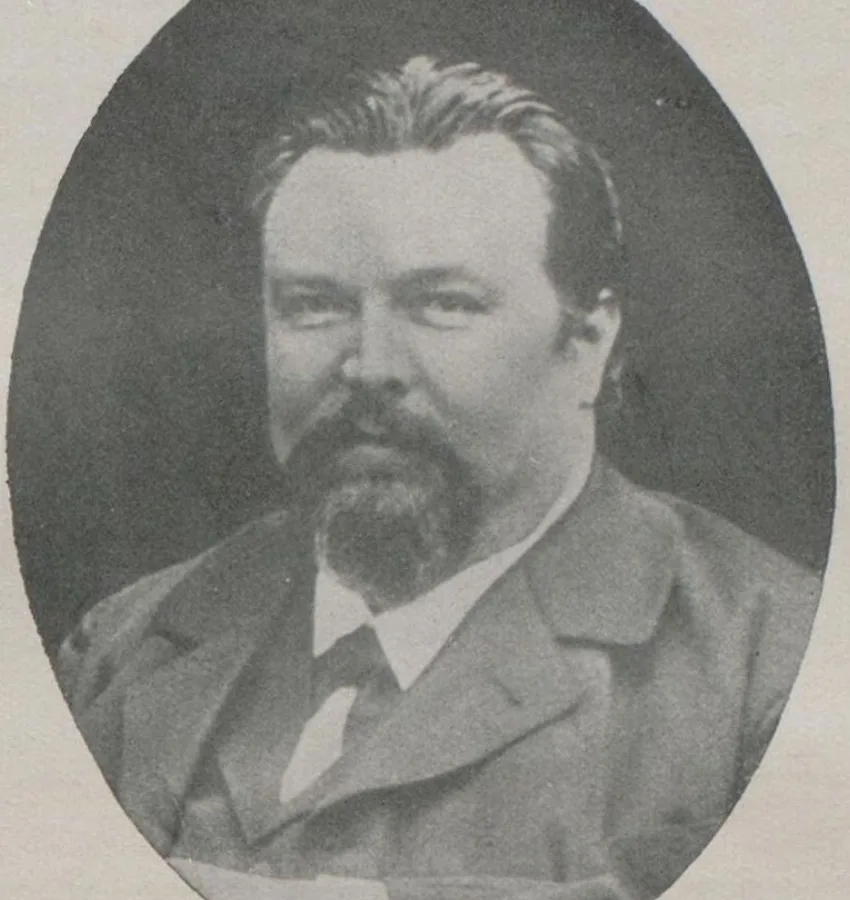 Wilhelm Emil Fein, German inventor and industrial pioneer.
Eventually, they moved toward power tools. The big leap came in 1895, when FEIN’s team combined a traditional hand drill with small electric motors, creating what the company describes as the concept birth of a tool with its own electric power source. It's this point that's often cited as the start of the modern power-tool idea.
Try this
Give your kid a toy screwdriver and a “repair mission.” German heritage sometimes looks like pretending to fix a chair.
A Personal Note
If you grew up with German roots but not much German language, lists like this can feel a bit like standing outside a museum after closing time. You can see the shadows, but you’re not sure what to do with them.
That’s why this page isn’t just “famous people Germany produced.” It’s music you can play while making dinner, stories you can read at bedtime, ideas you can turn into a five-minute conversation, and inventions you can literally put in your hands.
Heritage sticks when it pops up in ordinary life, not when you plan for a perfect cultural moment that never happens.
 Passing on your heritage is more than building clever minds.
I’m a dad raising kids outside Germany, and I’ve learned that heritage doesn’t survive on motivation. It survives on the repetition of small things we actually do, not big things we admire from a distance.
Part of that is how I work with my mother’s German recipe site as well. It’s not just food, it’s a way of passing down what our family knows and values, so it doesn't fade away.
I have a soft spot for Wilhelm Emil Fein. I’ve worked with tools for as long as I can remember, and it honestly caught me off guard to realize how much of my workshop life traces back to someone most people have never heard of.
German heritage isn’t only fairy tales and famous composers. Sometimes it’s the quiet satisfaction of a tool that works, and the legacy behind the way we build, fix, and figure things out.

Eran Fulson
Keeping German heritage alive across an ocean and a generation.
Eran Fulson is Canadian-born, Welsh by choice, and German at heart. A diaspora son raising kids in Wales further from German heritage than his parents were from theirs, he runs German at Heart for families doing the same thing. He writes from his own family's story, with real sources behind every guide. He co-founded Tour My Germany with his mom (Just Like Oma) and his niece Lydia, drawing on 15+ years exploring Germany from Hamburg to Bavaria. Heimweh Letters, his newsletter, reaches thousands of subscribers every week.
You might like these
German Culture: The Big Picture
Understand German culture through stories, customs, and values. Real insights for families, heritage-seekers, and curious minds. No clichés, just clarity.
King Ludwig II of Bavaria
Discover the life and castles of mad King Ludwig II of Bavaria. Get insight into his art-loving life and demise, and the inspiration behind his imaginative builds.
About Ludwig Van Beethoven: The Musical Prodigy
Let's talk about Ludwig Van Beethoven: the most famous composer and pianist in German music history. He changed the way for classical music around the world.
did you know?
Over 800 million currywursts are eaten each year in Germany, and 70 million in Berlin alone.

Words to live by
Think of all the beauty still left around you and be happy!
- Anne Frank
Discover our Just Like Oma family of websites:




Across media platforms, the Just Like Oma family of websites are celebrated for making German cooking, travel, and heritage fun & simple to understand, and easily accessible for everyone!



















Thanks for visiting German at Heart!
I created this space to rediscover, celebrate, and pass on the parts of our culture that matter most. Things I learned from my parents, who you may know as Oma Gerhild and Pastor Wolle.
My hope is that this becomes a place where you can reconnect with your roots, share stories, and keep the spirit of family and tradition alive.
I invite you to follow along on social media as I share ideas, inspiration (and a few fun surprises along the way) as we continue exploring what it means to be German at heart!
Cheers!


Copyright © | German at Heart (Just like Oma) | A Fulson Media Group Inc. Brand | All Rights Reserved
Powered by: Make Your Knowledge Sell!
AFFILIATE DISCLOSURE: German at Heart is a brand of Fulson Media Group Inc., which participates in various affiliate advertising to provide a means to earn advertising fees by linking to retail websites. Additionally, this website is a participant in the Amazon Services LLC Associates Program, an affiliate advertising program designed to provide a means for sites to earn advertising fees by advertising and linking to amazon.com and affiliated sites. We do not promote products we do not own or would not buy ourselves. Our goal is to provide you with product information and our own personal opinions or ideas. At times, we will showcase services, programs, and products. We aim to highlight ones that you might find interesting, and if you buy future items from those companies, we may get a small share of the revenue from the sale. We are independently owned and the opinions expressed here are our own.
PHOTOGRAPHY: Throughout this site, you'll find mostly photos that we've taken. We also feature some reader-contributed images and curated stock IMAGES BY Deposit Photos and others, offering further perspectives on all things German.
YOU SHOULD ALWAYS PERFORM DUE DILIGENCE BEFORE BUYING GOODS OR SERVICES ONLINE.