Steady Kids Know Where They Come From
By: Eran Fulson / Last Updated: July 21, 2026

In many families, there is a recipe card nobody can quite read anymore. The handwriting has faded (if it was even legible to begin with), half the measurements are missing because the woman who wrote it didn't think it needed them, and one line just says to bake it until it looks right.
You keep the card anyway because it's a nice memento to have. But since you can't actually make it, back in the drawer it goes.
I have spent years watching which family hand-me-downs survive and which vanish without anyone intentionally meaning to lose them.
And the kids who know what those mementos mean in their family story? They grow up knowing that where they came from has a hand in who they decide to be later on. An empty life story creates gaps that you may not be able to fill in when it's too late.

What actually sticks
I have written before about why knowing where you come from seems to steady a child, and I will not run the whole argument again here.
The short version is that kids who grow up with the real story of their family, setbacks and all, tend to hold up better when life turns difficult. A child does not grow more resilient by memorising a family tree. It's the storytelling that puts in the reps.
A child does not grow more resilient by memorising a family tree.
Oftentimes, it's sitting at a table while somebody older says, "This happened to us, and then this, and here we still are."
Which leaves an awkward question for the rest of us. Where is a busy parent supposed to find these stories, and when? Finding time somewhere between the school run and getting dinner on the table is ambitious at best. Usually, we just keep on keeping on.
And keeping on with the status quo is something that works for many families. But if you want to add another layer to the metaphorical onion of your child's identity, it's easier than you think.
Food is the easy way in
Here is the useful part. If there is any German in your family, even just a surname and a vague sense that a great-grandparent came over and then stopped mentioning it, you are already holding onto more material than you realise.
You do not have to invent a heritage activity or sign up for a course. Instead, you mostly have to cook something and talk while you do it.
Food is the easiest way in. You make the potato pancakes and try to call them by their German name (Reibekuchen), and have fun getting it wrong. Or it's a cake you learn to make for special occasions, or the Christmas biscuits that end in a mild argument about whether they are as good as somebody's grandmother used to make.
While your hands are busy, the stories naturally come out. Nobody sits a seven-year-old down for a formal lecture on the family. But a child stirring batter will absorb an astonishing amount before the cake hits the oven.
The December calendar helps for the same reason, since it is unusually well-stocked with small, specific things a family can do. St Nicholas leaves something in a shoe on the sixth, the Advent wreath gains a candle every Sunday, and Christmas Eve brings a whole extra day of festivities.
 A very eighties Christmas
None of it calls for belief or fluency. You simply need a moment to come round and do a small thing when it does. Those small things done on the same date every year are how a child learns they belong to a particular family and not a generic one.
You need less than you think
A few things worth saying plainly, since they stop people before they start.
You do not need the language. Most of us don't have it anyway, and the food has very little use for it.
You don't even need to have set foot in Germany. Your story still means something even if it is made with the wrong flour in the wrong country and has been adapted three times since anyone last saw the original.
None of this is about authenticity in the traditional sense. It's about a child growing up with the feeling of coming from somewhere specific, told by someone who loves them, in a kitchen that smells of something.
So, back to the card in the drawer, the one you can't quite read. The reading was never the part that mattered. The card is a prompt. It's standing in the kitchen and saying, this came from Oma, and she came from there, and it's made us who we are today.
...it's made us who we are today.
You do not need to decode the handwriting. Incomplete measurements and all, it will become something worthwhile to someone small enough to grow up remembering it.
If you want a hand knowing what to cook and when to do the small December things, that is most of what my Heimweh Letters are for. No extra time for heritage homework, just a helpful nudge to capture the right moment at the right time.
A Personal Note
The Rouladen I grew up with were my mother's first, and then slowly became mine when I had my own family. She offered help if something was going wrong. Otherwise, she admired whatever I had changed.
 My rouladen is not the same, but more or less the way my mother makes them
Her view was that recipes were never intended to be static. She altered many from her mom, as I've done with hers.
What brought all of this into focus for me was moving to Wales. I assimilated into Welsh and British life without noticing it was happening. It amazed me later how little effort it had taken by virtue of simply being here. Turns out, the environment does half of the work for free.
The parts of you that are not in the environment get no easy deal. My more obvious traits are the Canadian way I say "tomato" wrong (allegedly), my conviction that ice hockey is the best sport there is, and maple syrup going on things that do not need it.
Even those take work to pass to my kids over here, let alone bringing a German one along for the ride. But I want my kids to have the whole story of where they came from. Whatever small effort that takes, I am more than happy to make it.
If any of this struck a chord, passing down German heritage goes into the how of it in more detail.
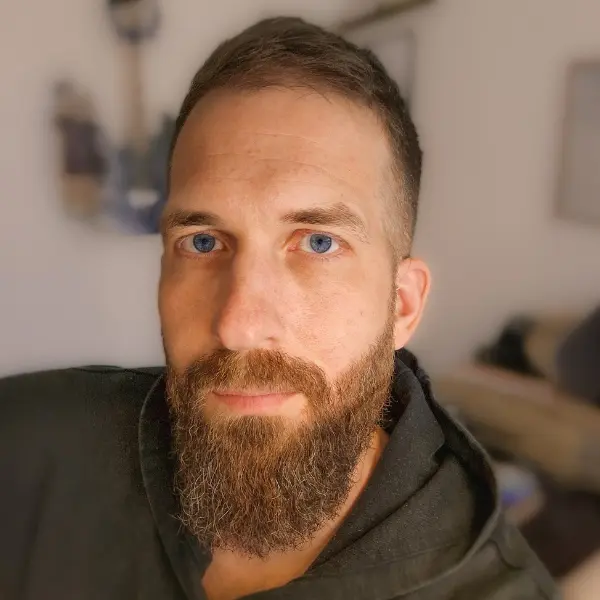
Eran Fulson
Keeping German heritage alive across an ocean and a generation.
Eran Fulson is Canadian-born, Welsh by choice, and German at heart. A diaspora son raising kids in Wales further from German heritage than his parents were from theirs, he runs German at Heart for families doing the same thing. He writes from his own family's story, with real sources behind every guide. He co-founded Tour My Germany with his mom (Just Like Oma) and his niece Lydia, drawing on 15+ years exploring Germany from Hamburg to Bavaria. Heimweh Letters, his newsletter, reaches thousands of subscribers every week.
did you know?
Over 800 million currywursts are eaten each year in Germany, and 70 million in Berlin alone.
Words to live by
Think of all the beauty still left around you and be happy!
- Anne Frank
Discover our Just Like Oma family of websites:
Across media platforms, the Just Like Oma family of websites are celebrated for making German cooking, travel, and heritage fun & simple to understand, and easily accessible for everyone!











Thanks for visiting German at Heart!
I created this space to rediscover, celebrate, and pass on the parts of our culture that matter most. Things I learned from my parents, who you may know as Oma Gerhild and Pastor Wolle.
My hope is that this becomes a place where you can reconnect with your roots, share stories, and keep the spirit of family and tradition alive.
I invite you to follow along on social media as I share ideas, inspiration (and a few fun surprises along the way) as we continue exploring what it means to be German at heart!
Cheers!

Copyright © | German at Heart (Just like Oma) | A Fulson Media Group Inc. Brand | All Rights Reserved
Powered by: Make Your Knowledge Sell!
AFFILIATE DISCLOSURE: German at Heart is a brand of Fulson Media Group Inc., which participates in various affiliate advertising to provide a means to earn advertising fees by linking to retail websites. Additionally, this website is a participant in the Amazon Services LLC Associates Program, an affiliate advertising program designed to provide a means for sites to earn advertising fees by advertising and linking to amazon.com and affiliated sites. We do not promote products we do not own or would not buy ourselves. Our goal is to provide you with product information and our own personal opinions or ideas. At times, we will showcase services, programs, and products. We aim to highlight ones that you might find interesting, and if you buy future items from those companies, we may get a small share of the revenue from the sale. We are independently owned and the opinions expressed here are our own.
PHOTOGRAPHY: Throughout this site, you'll find mostly photos that we've taken. We also feature some reader-contributed images and curated stock IMAGES BY Deposit Photos and others, offering further perspectives on all things German.
YOU SHOULD ALWAYS PERFORM DUE DILIGENCE BEFORE BUYING GOODS OR SERVICES ONLINE.