- Home
- Family Traditions
- German Baking Traditions
In Praise of the Pale Biscuit: Edible Prints
By: Stephanie Leitch / Published: January 5, 2026
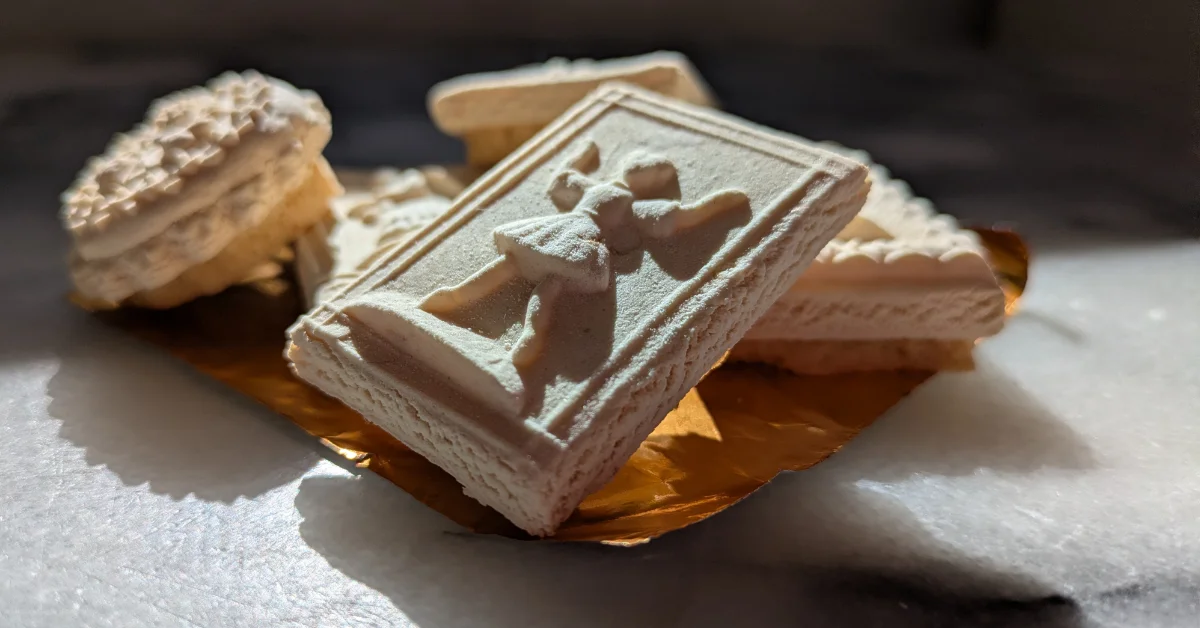 Close-up of traditional Springerle cookies with embossed designs.
During a cold, grey-skied sabbatical I spent in Berlin in 2014, my landlord’s daughter offered me a bag of what she considered modest cookies, along with her apologies that their flavors might be too subtle for an American palate.
Indeed, the brown cast of the Zimtsterne and the off-white anise-scented Springerle tend to pale in comparison with the bright array of technicolor American holiday confections.


But I have been schooling my palate. Each Advent, my Swiss friend Mirella turns her kitchen into a factory that produces at scale the Vanillekipferl (we know them as Mexican wedding cookies here); Mailenderli (butter cookies) made from eggs, lemon, sugar and flour; and Zimtsterne (cinnamon stars) of mostly ground almond, egg whites and cinnamon.
Holiday treats of the German-speaking regions are hearty confections of nuts, eggs and spices made with little processing and natural preservatives.
These sustainable treats form a repertoire of edibles whose ingredients the industrious baker combines in late fall; ingredients that have been cozily steeping together in airtight containers until they are brought out in Saturdays during November to be rolled out and baked in time for the holidays.
 An assortment of German baking traditions, all on one plate.
For the Christmas season, my own mother, an industrious ex-pat from Baden-Württemberg, prepares a quantity of fruitcakes (think nuts, figs, dates, brandy and chocolate, nothing gelatinously green or red in there) and Linzertorte: a hazelnut torte with a lattice layered over a thin filling of raspberry and red currant jam combined with a hint of kirsch.
These dense, chewy frisbees of nuts and bright fruit are what my brother-in-law good-naturedly dubs “jam pie,” a dessert that miraculously survives bad jokes, extended shipping, as well as long trips in carry-on luggage.
Stored in the refrigerator, they still taste fresh after months, should you be able to keep them around that long. I will admit to having lost an occasional Linzertorte in a crowded and chaotic freezer.
When I rediscovered it two years later, I unrepentantly served it to guests who ultimately couldn’t decide if it was the quality of the torte or the freezer that deserved the accolades.
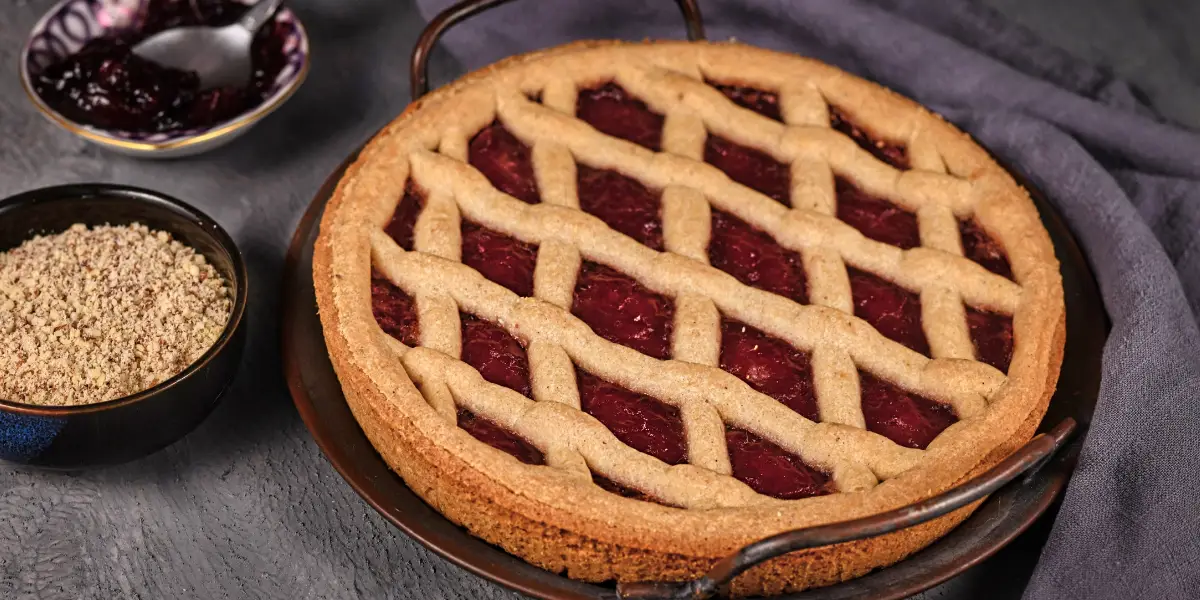 The durable and delicious Linzertorte.
Indeed, most of these pre-modern dessert recipes had natural preservatives like honey and spices that allowed them to be stored in tins and savored gradually. German Christmas cookies are also notably low in fat, mostly held together by egg yolks and not butter.
Gluten-intolerant eaters also post paeans to these cookies because they don’t develop gluten. But maybe my favorite thing about them is that they are stealth delights, not garish in color, nor beckoning with icing.
They are elegant, compact, unbreakable, and you’ll count yourself lucky if you count yourself among the set who prefers to consume food produced in earth tones.
With German chain bakeries competing for market share and luring customers with empty-caloried American-inflected donuts and cake-pops, even the contemporary German has trouble sourcing some of these old-world goodies.
My Berlin baker opened for me a gateway to the world of hearty, historical, and appetizing treats. Consumed in moderation, one could even call eating these guilt-free snacking.
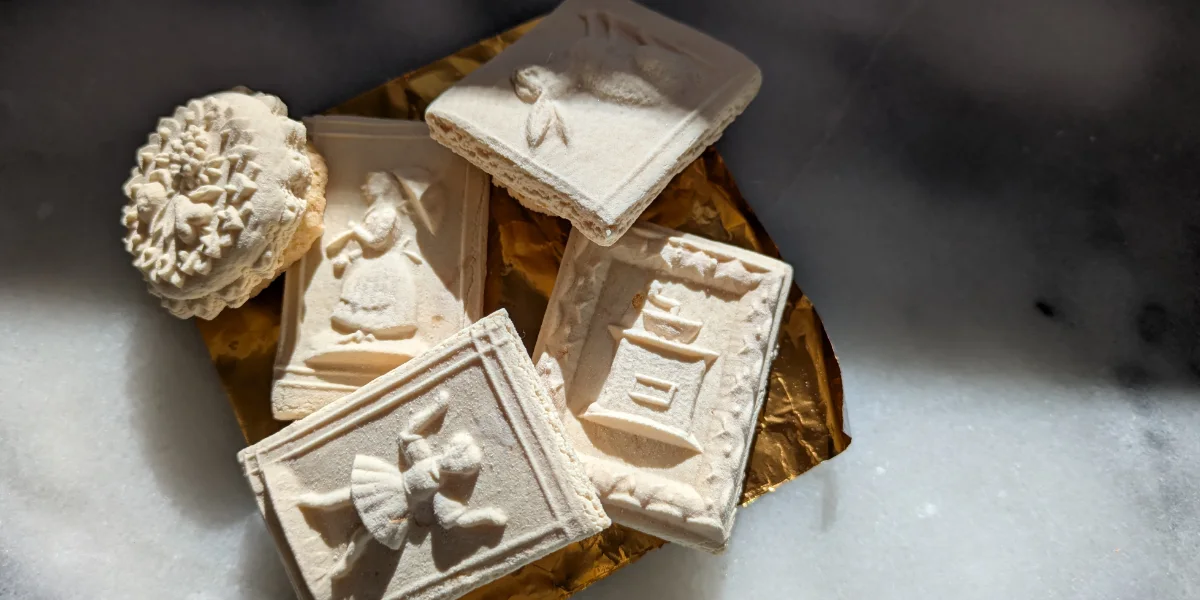 Springerle: Made by Mirella Siegrist
Consider the Springerle. This Swabian specialty, also popular in Switzerland, is a small miracle of texture. Produced from impressions made by forms (Model) of carved pear wood, this dough made from lemon zest, sugar, flour, eggs and anise is rolled to a precise height.
The form is carefully dusted with flour and even pressure is applied from above. The dough retains embossed impressions that the sculptor carved. Then the baker carefully cuts between guidelines to separate the cookies.
Mirella has a stash of forms that came from an antiquarian in Aachen, but these forms turn up in flea markets and antique shops stateside as well.
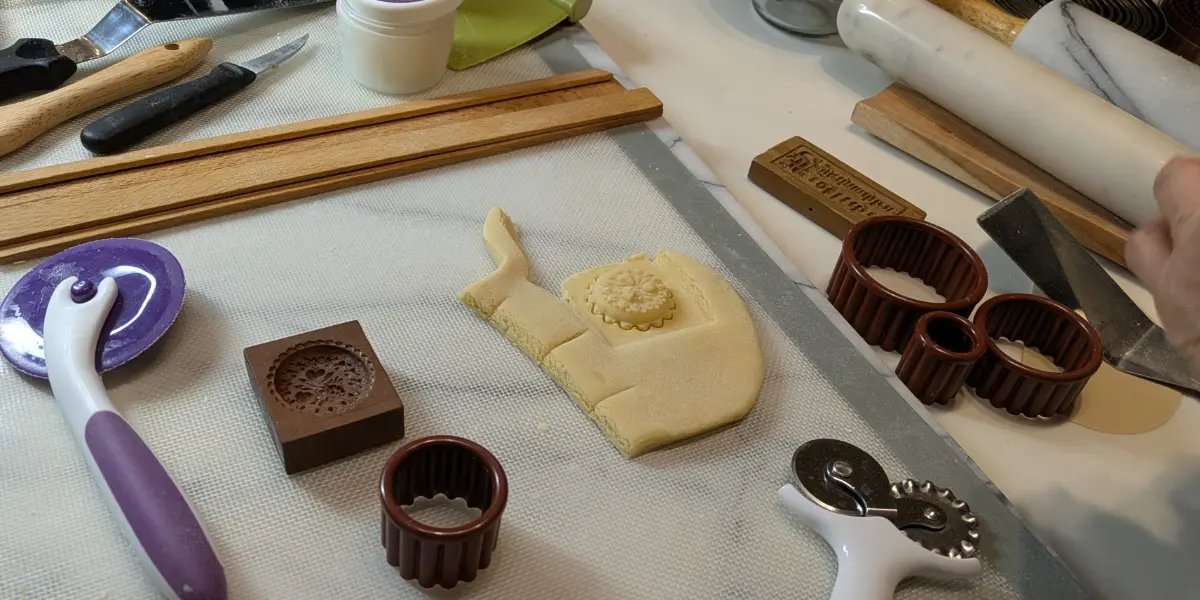 Dough, molds, and a bit of patience.
Designs vary but it’s typical to see among them carvings featuring stereotypes of people (ladies with umbrellas, or men in top hats, for instance), foxes, rabbits, or coffee mills (if you’ve read Otfried Preußler’s Der Räuber Hotzenplotz, you will understand the visual appeal of a hand-operated coffee grinder).
The damp cookie dough is left to dry under a towel for a day or two. This rest sets the design and dries out the top and the sides. When baked, the still slightly damp bottom layer expands in a way that the top of the biscuit doesn’t and forms a platform for the top layer to stand on. This base, then, gives the cookie its name “Springerle,” or little jumper, after the way it rises in the heat of the hot oven.
The distinct texture formed by these two layers is the showstopper of this confection and yields a cookie that is both crunchy and chewy.
The anise taste is subtle, distinct, and pleasantly curious. And then there’s also the subversive pleasure of destroying a perfect design.
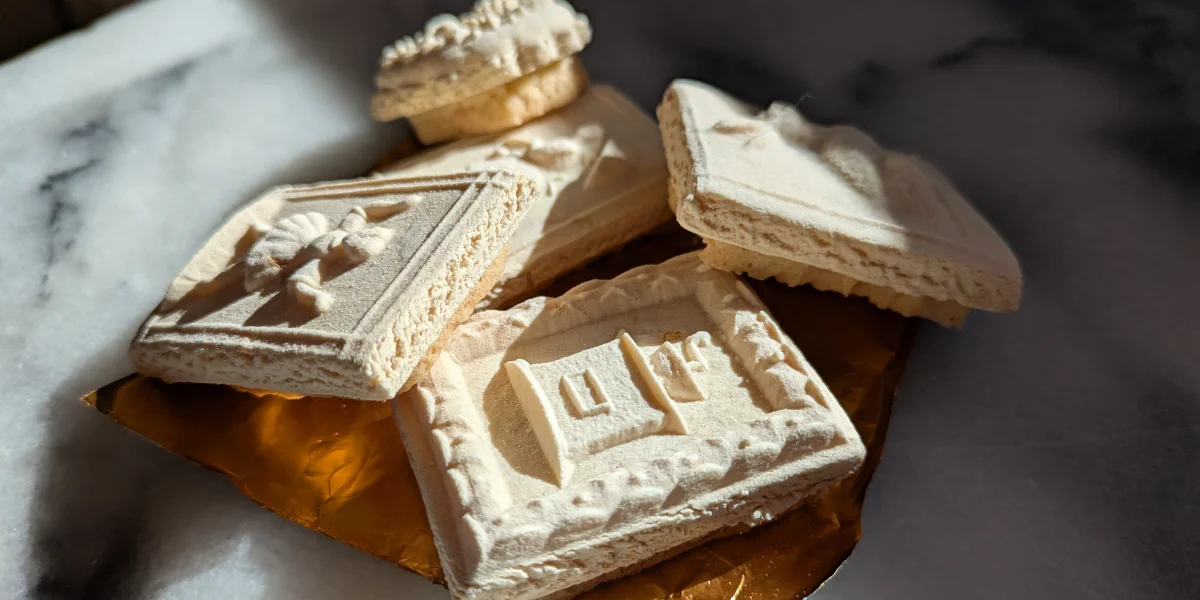 Centuries in the making, and still delicious today.
The kind of German desserts like Springerle reside somewhere on the spectrum between savory and sweet. This versatility frees you to try them with wine; they pair equally well with a sweet Riesling or a drier white wine like a Grüner Veltliner.
So this pale biscuit with old-world design (imagine eating the direct copy of a treat someone else savored centuries ago!) can deliver whatever you happen to be hungry for: an accompaniment for coffee or tea during Kaffeestunde, or a companion to an aperitif, or after dinner with wine.
Try that, Snickerdoodle!

Stephanie Leitch
Guest Contributor • Professor
Stephanie Leitch is a Professor of Early Modern Art History at Florida State University. She published Early Modern Print Media the Art of Observation: Training a Literate Eye (Cambridge University Press) in 2024 and is currently co-writing a book about the role of the copied image in printing technology.
did you know?
Over 800 million currywursts are eaten each year in Germany, and 70 million in Berlin alone.

Words to live by
Think of all the beauty still left around you and be happy!
- Anne Frank
Discover our Just Like Oma family of websites:



Across media platforms, the Just Like Oma family of websites are celebrated for making German cooking, travel, and heritage fun & simple to understand, and easily accessible for everyone!



















Thanks for visiting German at Heart!
I created this space to rediscover, celebrate, and pass on the parts of our culture that matter most. Things I learned from my parents, who you may know as Oma Gerhild and Pastor Wolle.
My hope is that this becomes a place where you can reconnect with your roots, share stories, and keep the spirit of family and tradition alive.
I invite you to follow along on social media as I share ideas, inspiration (and a few fun surprises along the way) as we continue exploring what it means to be German at heart!
Cheers!


Copyright © | German at Heart (Just like Oma) | A Fulson Media Group Inc. Brand | All Rights Reserved
Powered by: Make Your Knowledge Sell!
AFFILIATE DISCLOSURE: German at Heart is a brand of Fulson Media Group Inc., which participates in various affiliate advertising to provide a means to earn advertising fees by linking to retail websites. Additionally, this website is a participant in the Amazon Services LLC Associates Program, an affiliate advertising program designed to provide a means for sites to earn advertising fees by advertising and linking to amazon.com and affiliated sites. We do not promote products we do not own or would not buy ourselves. Our goal is to provide you with product information and our own personal opinions or ideas. At times, we will showcase services, programs, and products. We aim to highlight ones that you might find interesting, and if you buy future items from those companies, we may get a small share of the revenue from the sale. We are independently owned and the opinions expressed here are our own.
PHOTOGRAPHY: Throughout this site, you'll find mostly photos that we've taken. We also feature some reader-contributed images and curated stock IMAGES BY Deposit Photos and others, offering further perspectives on all things German.
YOU SHOULD ALWAYS PERFORM DUE DILIGENCE BEFORE BUYING GOODS OR SERVICES ONLINE.