What Is Schnitzel? It Depends on Who You're Asking and Which Country You're In
By: Eran Fulson / Last Updated: April 3, 2026
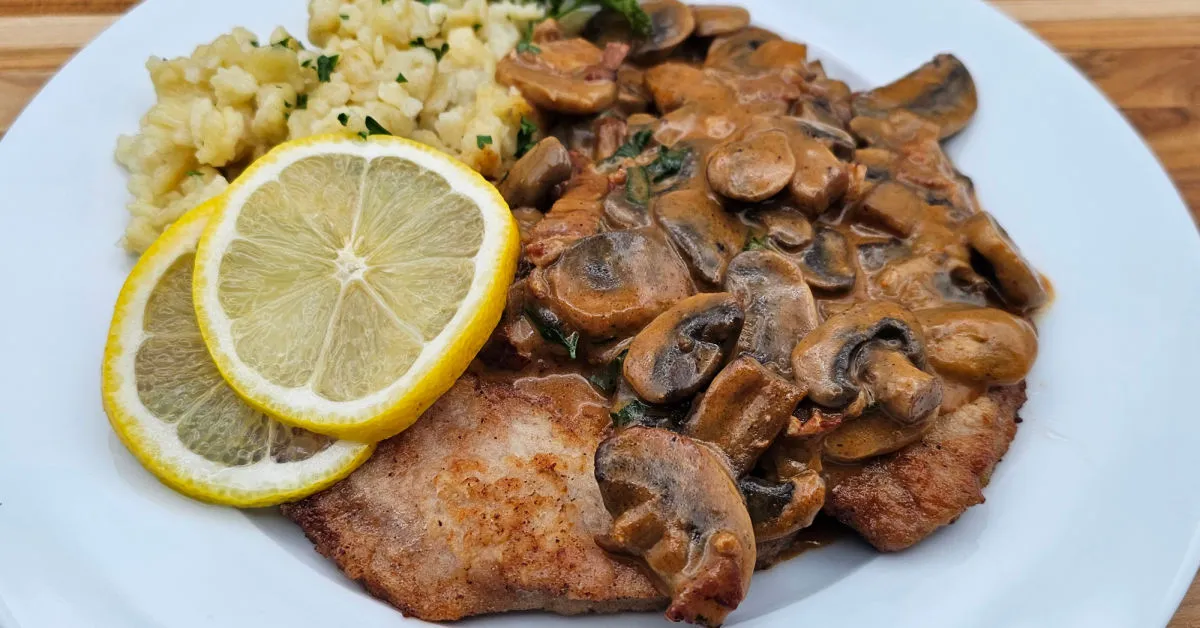 Jägerschnitzel with non-breaded pork and mushroom bacon gravy.
Schnitzel is such a traditional dish in Germany that it comes as a surprise to me that not everyone knows the answer to “What is Schnitzel?” My first answer is that it's delicious. My second answer is … well, it's actually a bit more complicated.
I'm going to peel back the layers of this most delicious dish, immerse ourselves in its history, and explore the many types of schnitzels that are cooked in the different regions of Germany.

But before I take a bite into history, a quick definition of schnitzel is needed.
What Does "Schnitzel" Mean in German?
The word comes from the German verb schnitzen, meaning "to carve" or "to cut," and Schnitzel itself is the diminutive form, literally a small cut or thin slice.
So the name is doing exactly what it describes - it's a piece of meat that has been cut thin, pounded flatter still, then breaded and fried.
The History of Schnitzel and Where it Comes From
The Roman Influence:
Sometime between the 1st and 5th centuries AD, Of Culinary Matters (originally, De Re Coquinaria) was written and is considered to be the first recorded cookbook that is still in print today. Most assume Marcus Gavius Apicius, a Roman gourmet who lived sometime in the 1st century AD during the reign of Tiberius, wrote or compiled it.
Within the many techniques given, there are three that match schnitzel: pounding meat to tenderize, coating with bread crumbs, and frying.
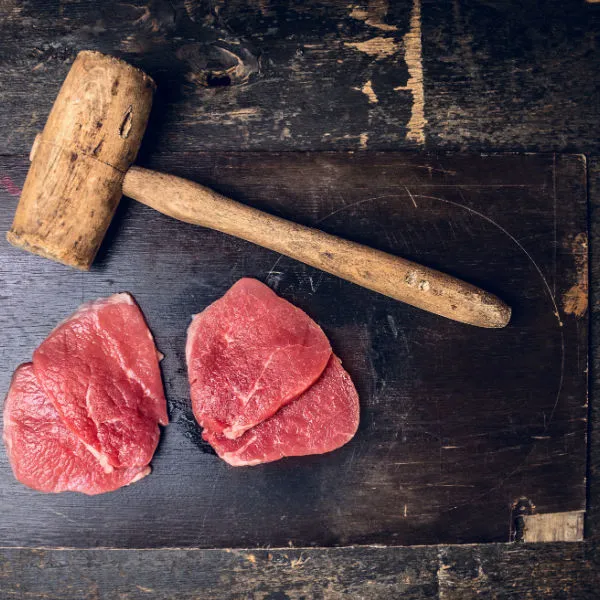 Pounding meat to tenderize has been done for ages.
This suggests that our modern schnitzels have been around for over 2,000 years.
From 12 BC to 16 AD, the Romans traveled to the Germanic countries, the land bordered by the Vistula R. on the east, the Rhine R. on the west, southern Scandinavia on the north, and the upper Danube R. on the south. I think one can assume their cooking methods came with them and is the start of answering the question, What is Schnitzel?
The Italian Influence:
Fast-forward to the Middle Ages, when veal was widely eaten in northern Italy, and then later, in the Renaissance period, Cotoletta alla Milanese is mentioned in cookbooks in the early 17th century. Just what is Cotoletta alla Milanese? A tender veal cutlet coated in crunchy breadcrumbs and fried in butter, usually still with a bone.
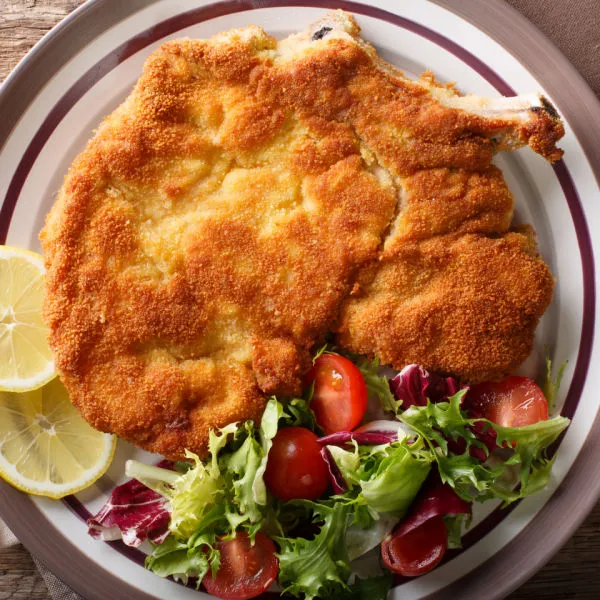 Veal Milanese (Cotoletta Alla Milanese) with lemon. Not boneless!
Ummm, that almost sounds like a fat schnitzel, aka breaded cutlet.
The Austrian Influence:
Fast-forward again, this time to the 1850's and Radetzky, the Austrian field marshal stationed in Northern Italy, was so impressed with that Cotoletta alla Milanese that he brought it back home to Austria. A little pounding of the meat, and the Austrian Wiener Schnitzel was born.
And so we have the answer to, What is Schnitzel!
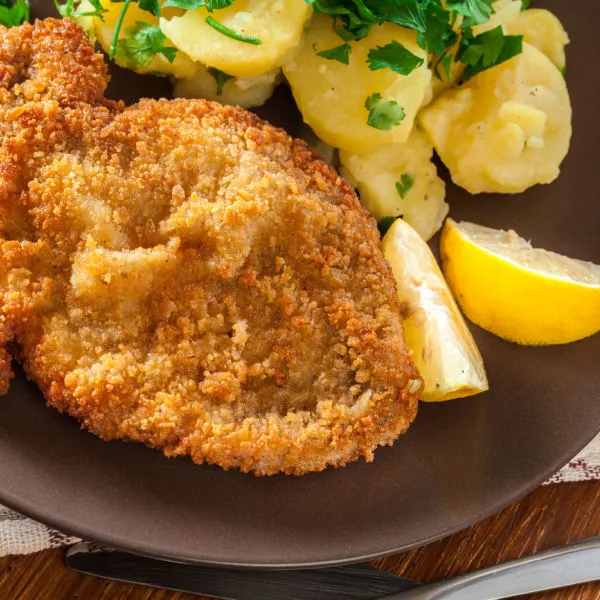 Wiener Schnitzel with lemon and boiled potatoes. Of course, made with veal!
This is considered by many to be the beginning of the history of the Schnitzel, claiming Austria as its origin. And by Austrian law and trademarks, for a schnitzel to be called a Wiener Schnitzel or Viennese Schnitzel, it must be made from veal. Only veal.
The German Influence:
The German word schnitzel (Middle High German: snitzel) is a diminutive of sniz meaning 'slice'. The name Wiener Schnitzel is first seen in printed in this book: "Rheinische Jahrbücher zur gesellschaftlichen Reform", by Püttmann, Hermann, Publication date: 1845.
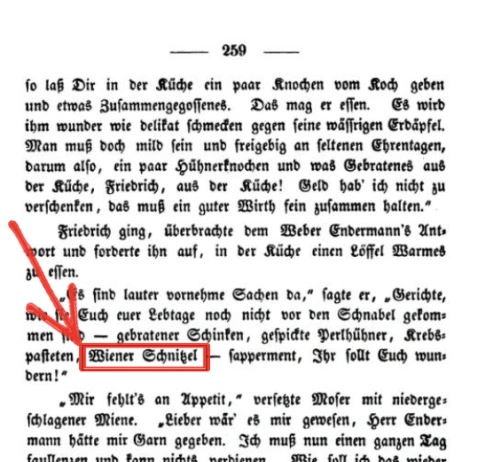 If you can read old German, you'll see Wiener Schnitzel printed in the highlighted box.
What? This was published in 1845? Before Radetzky?
That puts his contribution into question. But it does show that the actual word schnitzel is of German origin. The Viennese schnitzel connection really remains unknown. And so the controversy continues. Can schnitzel really be called a German recipe? Well, linguistically, the word IS German.
Even if the origins of schnitzel can't be pinned down with accuracy, its place in the culinary history of Germany is established. German cooks have put their own twists on the dish, creating many versions.
The use of different types of meat, such as chicken, veal, beef, mutton, pork, turkey, and even venison, and then the variety of sauces and combinations of sides, provide a type of schnitzel to suit regional palates.
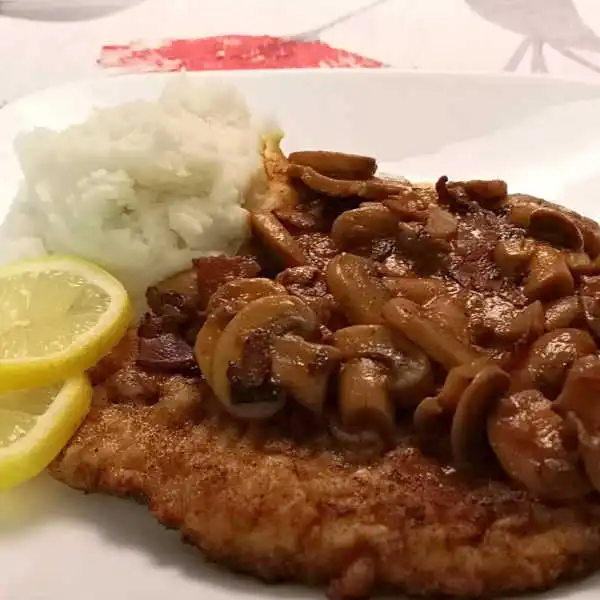 Oma's German Jägerschnitzel with mushroom-bacon sauce. Breaded schnitzel, of course!
Austrians have a culinary law: Never ever put a sauce on top of a breaded schnitzel!
For example, Jägerschnitzel in Austria is a plain piece of fried veal covered with sauce, as shown at the very top of this article.
Germans, however, don't mind having a mouthwatering creamy mushroom sauce cover that perfectly breaded and fried piece of meat.
Types of Schnitzel
With so many varieties to choose from, here are the top 10:
- Wienerschnitzel - Wiener schnitzel (must be veal)
- Schnitzel Natur - non-breaded schnitzel
- Jägerschnitzel - hunter's schnitzel (breaded or non-breaded schnitzel with dark creamy mushroom sauce, with or without bacon)
- Rahmschnitzel - schnitzel with a creamy sauce (with or without mushrooms)
- Paprikaschnitzel (aka Zigeunerschnitzel) - paprika schnitzel (breaded schnitzel with a sauce from tomatoes, roasted onion, and bell pepper)
- Bierschnitzel - beer schnitzel (non-breaded schnitzel, covered with a beer sauce, topped with cheese and oven baked)
- Frankfurterschnitzel - breaded schnitzel served with Frankfurter Green Sauce
- Zwiebelschnitzel - non-breaded schnitzel and baked in an onion, cream and wine sauce topped with cheese
- Holsteinschnitzel - Holstein-style schnitzel (breaded schnitzel served with a fried egg, anchovies, and a lemon-caper sauce)
- Münchner Schnitzel - Munich-style schnitzel (schnitzel brushed with horseradish and sweet mustard before breading)
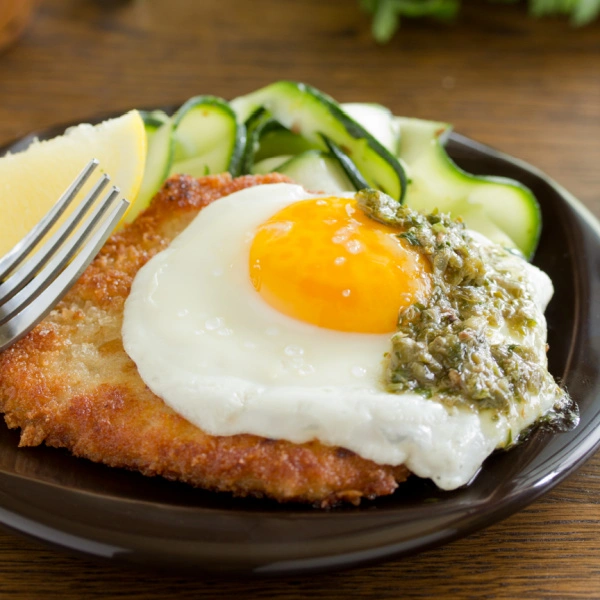 Holstien Schnitzel with fried egg and caper sauce.
Pair your Schnitzel:
Although schnitzel will pair with almost anything, there are several side dishes that stand out as the most popular sides for that perfect schnitzel. The most popular choice? Pomme Frites!
- a lemon wedge or slice
- Kartoffelsalad NG* (German potato salad)
- Kartoffelsalad SG* (German potato salad)
- Spätzle (egg noodles)
- Gurkensalat NG (cucumber salad)
- Gurkensalat SG (cucumber salad)
- Pommes Frites (French fries)
- Bratkartoffeln (fried potatoes)
- Schnitzelbrötchen - Serve breaded schnitzel on a crispy German bun with mustard, mayo, ketchup, lettuce and pickle slices
*NG: Northern German style (with cream/mayo)
*SG: Southern German style (without cream/mayo)
You can find all these recipes at Quick German Recipes.
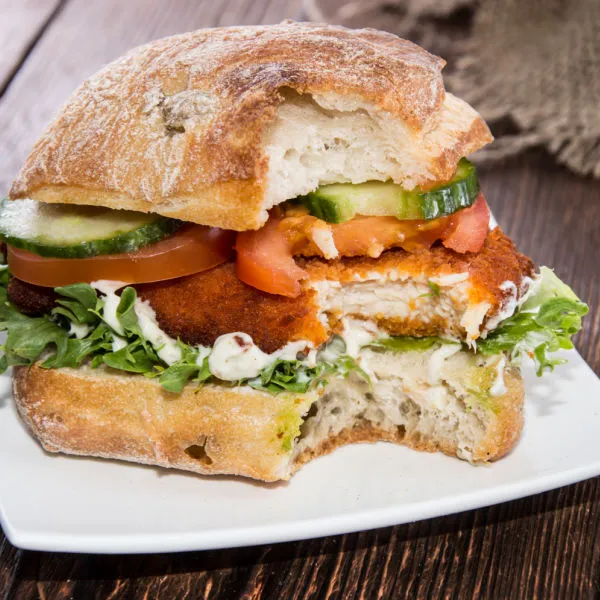 Schnitzel Brötchen: Schnitzel on a loaded bun. Yum!
How to Make Schnitzel Without the Fuss
If you have a craving for that authentic taste of Germany, here's a quick overview of how to make a great pork schnitzel, the most popular kind that's served in Germany.
This same recipe will work for almost any type of meat, such as chicken breast or chicken cutlets, sliced turkey breast, or veal meat, almost any thin piece of meat.
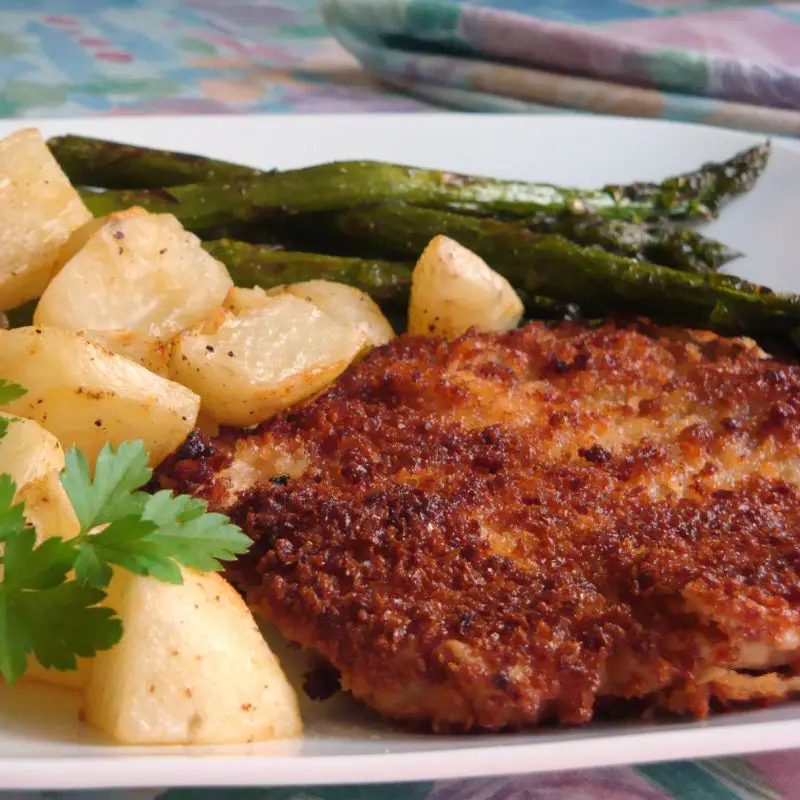 Oma's pork schnitzel served with asparagus and potatoes
Traditionally, boneless pork chops or pork cutlets are butterflied open and pounded thin with the flat side of a meat mallet. This works best if the meat is placed between sheets of plastic wrap.
- The easiest way to make schnitzel is to set up an assembly line. Set out three shallow plates. Into the first one, add flour that’s seasoned with salt and black pepper. Into the next, make an egg wash (egg mixed with water). Into the last one, add your regular or Panko breadcrumbs.
- Dredge the meat first into the flour, then into the egg mixture, and then into the breadcrumbs.
- Place a large skillet over medium-high heat on the stove and add a butter/oil mixture. When hot, fry the schnitzel (without crowding them in the skillet), about 3 minutes on each side, until crispy. Drain and serve.
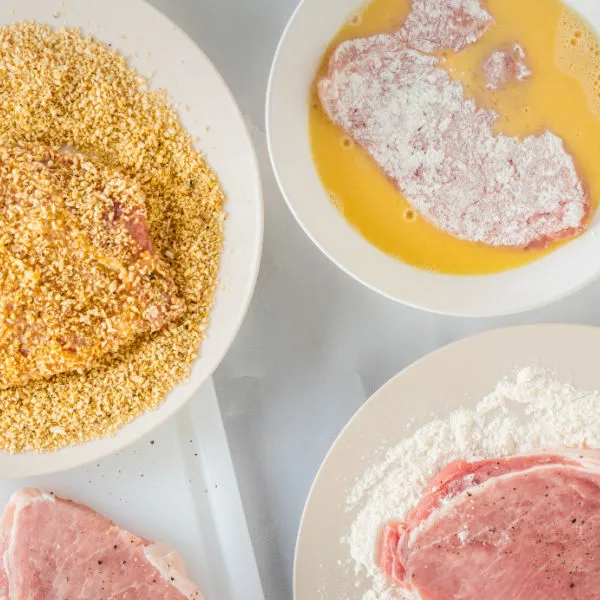 Making schnitzel with an assembly line. So easy!
Follow these three easy steps, and you'll be enjoying the best pork schnitzel for dinner tonight.
To see Oma's complete printable recipe, click here.
Schnitzel is more than just a meal. It's that little bit of German culture that starts with simple ingredients and transforms them into a mouth-watering dish that's comfort food at its best.
Basically, if you like a pork chop, you'll love a schnitzel.
Guten Appetit und Tschüß
We’ve peeled back those layers to answer that question, What is schnitzel?
We’ve looked at the unusual history and seen the regional differences within Germany. More than just a mere dish, schnitzel is a slice of German culture, where simple ingredients are lovingly transformed into a mouthwatering dish.
Next time you savor that perfectly cooked schnitzel (with Jägersosse?), remember that it’s more than a meal. It’s a delicious taste of German tradition.

Eran Fulson
Keeping German heritage alive across an ocean and a generation.
Eran Fulson is Canadian-born, Welsh by choice, and German at heart. A diaspora son raising kids in Wales further from German heritage than his parents were from theirs, he runs German at Heart for families doing the same thing. He writes from his own family's story, with real sources behind every guide. He co-founded Tour My Germany with his mom (Just Like Oma) and his niece Lydia, drawing on 15+ years exploring Germany from Hamburg to Bavaria. Heimweh Letters, his newsletter, reaches thousands of subscribers every week.
did you know?
Over 800 million currywursts are eaten each year in Germany, and 70 million in Berlin alone.

Words to live by
Think of all the beauty still left around you and be happy!
- Anne Frank
Discover our Just Like Oma family of websites:




Across media platforms, the Just Like Oma family of websites are celebrated for making German cooking, travel, and heritage fun & simple to understand, and easily accessible for everyone!



















Thanks for visiting German at Heart!
I created this space to rediscover, celebrate, and pass on the parts of our culture that matter most. Things I learned from my parents, who you may know as Oma Gerhild and Pastor Wolle.
My hope is that this becomes a place where you can reconnect with your roots, share stories, and keep the spirit of family and tradition alive.
I invite you to follow along on social media as I share ideas, inspiration (and a few fun surprises along the way) as we continue exploring what it means to be German at heart!
Cheers!


Copyright © | German at Heart (Just like Oma) | A Fulson Media Group Inc. Brand | All Rights Reserved
Powered by: Make Your Knowledge Sell!
AFFILIATE DISCLOSURE: German at Heart is a brand of Fulson Media Group Inc., which participates in various affiliate advertising to provide a means to earn advertising fees by linking to retail websites. Additionally, this website is a participant in the Amazon Services LLC Associates Program, an affiliate advertising program designed to provide a means for sites to earn advertising fees by advertising and linking to amazon.com and affiliated sites. We do not promote products we do not own or would not buy ourselves. Our goal is to provide you with product information and our own personal opinions or ideas. At times, we will showcase services, programs, and products. We aim to highlight ones that you might find interesting, and if you buy future items from those companies, we may get a small share of the revenue from the sale. We are independently owned and the opinions expressed here are our own.
PHOTOGRAPHY: Throughout this site, you'll find mostly photos that we've taken. We also feature some reader-contributed images and curated stock IMAGES BY Deposit Photos and others, offering further perspectives on all things German.
YOU SHOULD ALWAYS PERFORM DUE DILIGENCE BEFORE BUYING GOODS OR SERVICES ONLINE.