Pulling the Easter Thread: German Easter Traditions
By: Eran Fulson / Last Updated: March 25, 2026
The first real sign of spring, in my memory, is green grass.
Not birdsong or daffodils. Just grass.
My living room, circa 1987. The light through the window is suddenly less grey. Outside, the yard has stopped being a somber stew of slush, mud, and despair.
Inside, I’m already bouncing with purpose. Chocolate is involved.
Celebrating German Easter traditions as a kid felt like winter was officially fired with extreme efficiency.
After weeks where snow looked dirty five minutes after it fell, Easter showed up like a small miracle wrapped in foil. You could finally run outside without your boots weighing as much as you.


The Easter Egg Hunt
An Easter egg hunt felt as though life was making up for Christmas being so far away.
I remember the crinkle of foil wrappers. The feel of chocolate warming in a small fist after the thrill of finding a hidden egg, like I'd unearthed a priceless artifact.
I also remember being deeply unconcerned with meaning.
If you'd told childhood me that I was participating in a tradition with German roots, I would've nodded thoughtfully, then shoved another mini egg in my mouth. Culturally enlightened, sure. In the way a raccoon is "enlightened" when it locates a bin full of snacks.
For years, Easter just existed in that accepted category of family holidays. You do it because you've always done it. It's Easter.
The eggs have been hidden by someone with the tactical precision of a military operation or the energy of someone who has already given up.
Either way, the hunt must happen.
Starting to Split
 It happens to all of us
As the years go by, you start noticing subtle (and not-so-subtle) changes.
Easter displays begin appearing in shops sometime around January 3rd. I can't remember when it happened, but now you can buy a chocolate rabbit the size of a small dog.
Even more recently, I've developed a surprisingly personal grief about the decline in quality of the Cadbury Creme Egg. Not just disappointment, but grudging dismay. (Do not pretend you haven't heard this speech)
At some point, it starts to feel over the top.
It's easy to roll your eyes at the commercialization. We make jokes about it, but we still buy it all anyway.
Perhaps we call it "tradition" while trying to remember what we actually loved.
But here's the part I didn't clock as a kid...
The core of it all is something very, very German.
The Osterhase (Easter hare) first appeared in German folklore in the 1600s. By the 1700s, German immigrants had packed up their egg-hiding, hare-believing ways and carried them to Pennsylvania. Their kids built nests for the "Oschter Haws" to fill.
Over time, those nests became baskets, the hare became a bunny, and the whole thing turned into the Easter egg hunt we know now.
All these traditions turned children into tiny, sugar-motivated detectives.
The Thread is Pulled
I can't recall the exact moment I discovered there was more to Easter celebrations than my childhood had led me to believe. It was more like I read something without expectation, and suddenly, my childhood living room looked a little different.
Same carpet and familiar foil wrappers.
But now there was a thread.
A line connecting a muddy post-winter yard to generations who marked the turning of the season in the same way. My parents did it. Their parents did it. And somewhere in Germany, long before any of us were born, someone hid eggs and watched children tear through a garden to find them.
That's what I want to keep alive in April.
Not the endless aisles of pastel everything.
The tradition that says, "spring is here."
German Roots
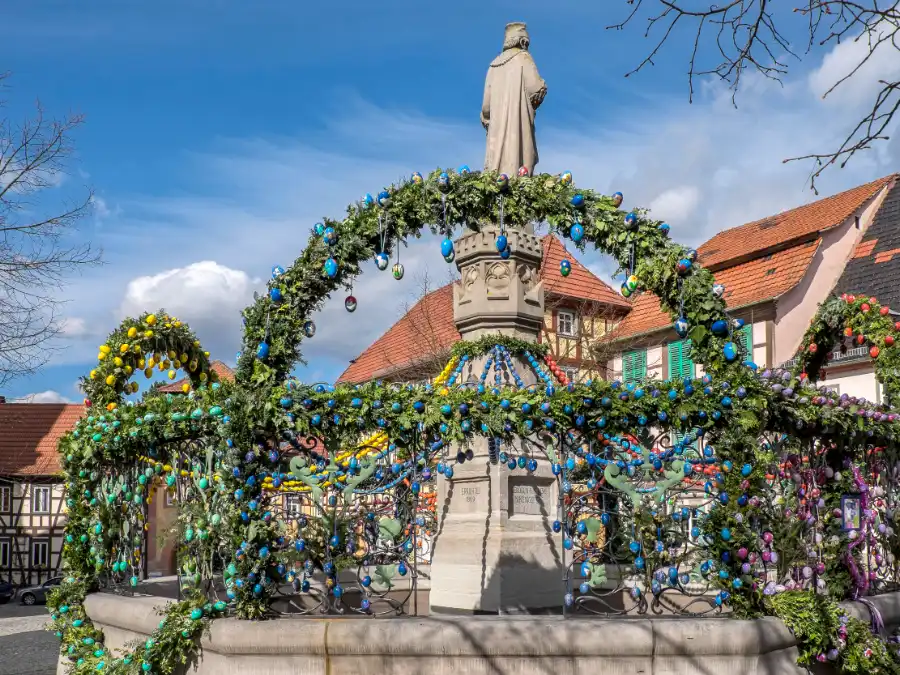 Easter-decorated fountain in Osterbrunnen
In Germany, they still say it loudly. Whole towns decorate eggs with a level of commitment that borders on competitive sport.
Sorbian communities in eastern Germany use wax-resist and scratch techniques that turn a breakfast ingredient into museum-worthy art.
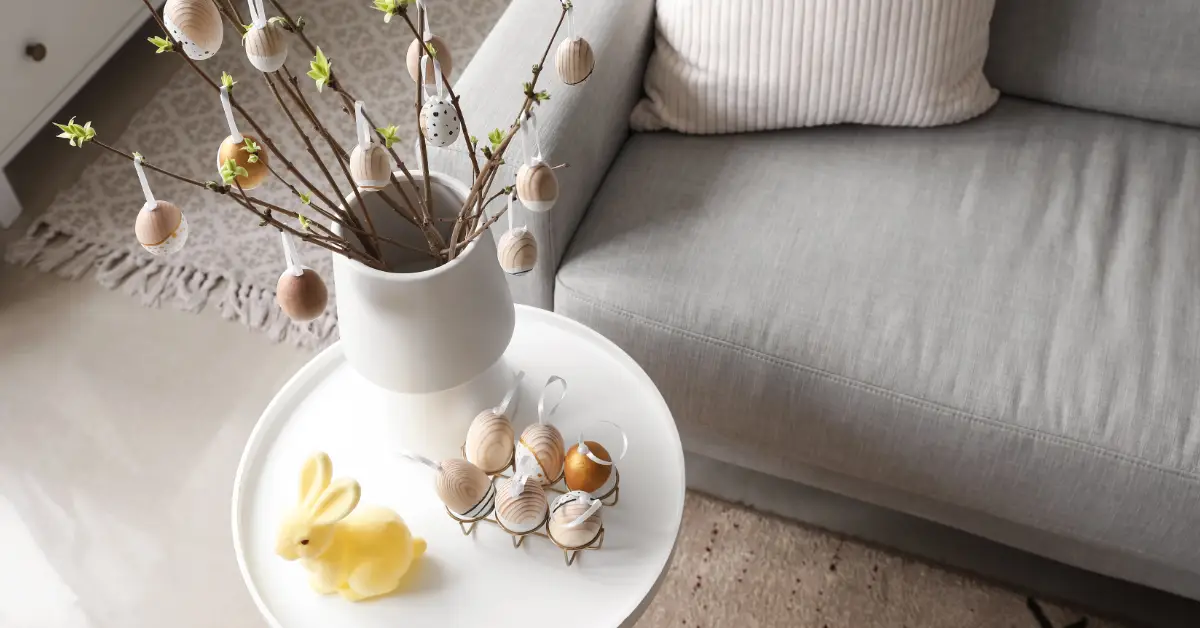
Families hang painted eggs from branches to make Ostereierbaum (Easter egg trees).
In Franconia, entire public fountains get covered in hundreds of hand-painted eggs every spring.
And then there's the Osterfeuer. Giant bonfires lit to chase away winter. No pastels or plastic grass. Just fire, community, and the collective agreement that winter has overstayed its welcome.
When kids look for what's been hidden, they feel like the world still holds small surprises. We all share something sweet on purpose, not by accident.
We can disparage the over-commercialization (I certainly will). But remembering the roots pulls it back into something human, even if it also remains profoundly calorific.
Some traditions are sacred. Others are just delicious.
But sometimes, happily, it's both.
And if Easter has started to feel like a sales event, you can always light a fire and tell winter to leave.

Eran Fulson
Keeping German heritage alive across an ocean and a generation.
Eran Fulson is Canadian-born, Welsh by choice, and German at heart. A diaspora son raising kids in Wales further from German heritage than his parents were from theirs, he runs German at Heart for families doing the same thing. He writes from his own family's story, with real sources behind every guide. He co-founded Tour My Germany with his mom (Just Like Oma) and his niece Lydia, drawing on 15+ years exploring Germany from Hamburg to Bavaria. Heimweh Letters, his newsletter, reaches thousands of subscribers every week.
did you know?
Over 800 million currywursts are eaten each year in Germany, and 70 million in Berlin alone.

Words to live by
Think of all the beauty still left around you and be happy!
- Anne Frank
Discover our Just Like Oma family of websites:



Across media platforms, the Just Like Oma family of websites are celebrated for making German cooking, travel, and heritage fun & simple to understand, and easily accessible for everyone!


















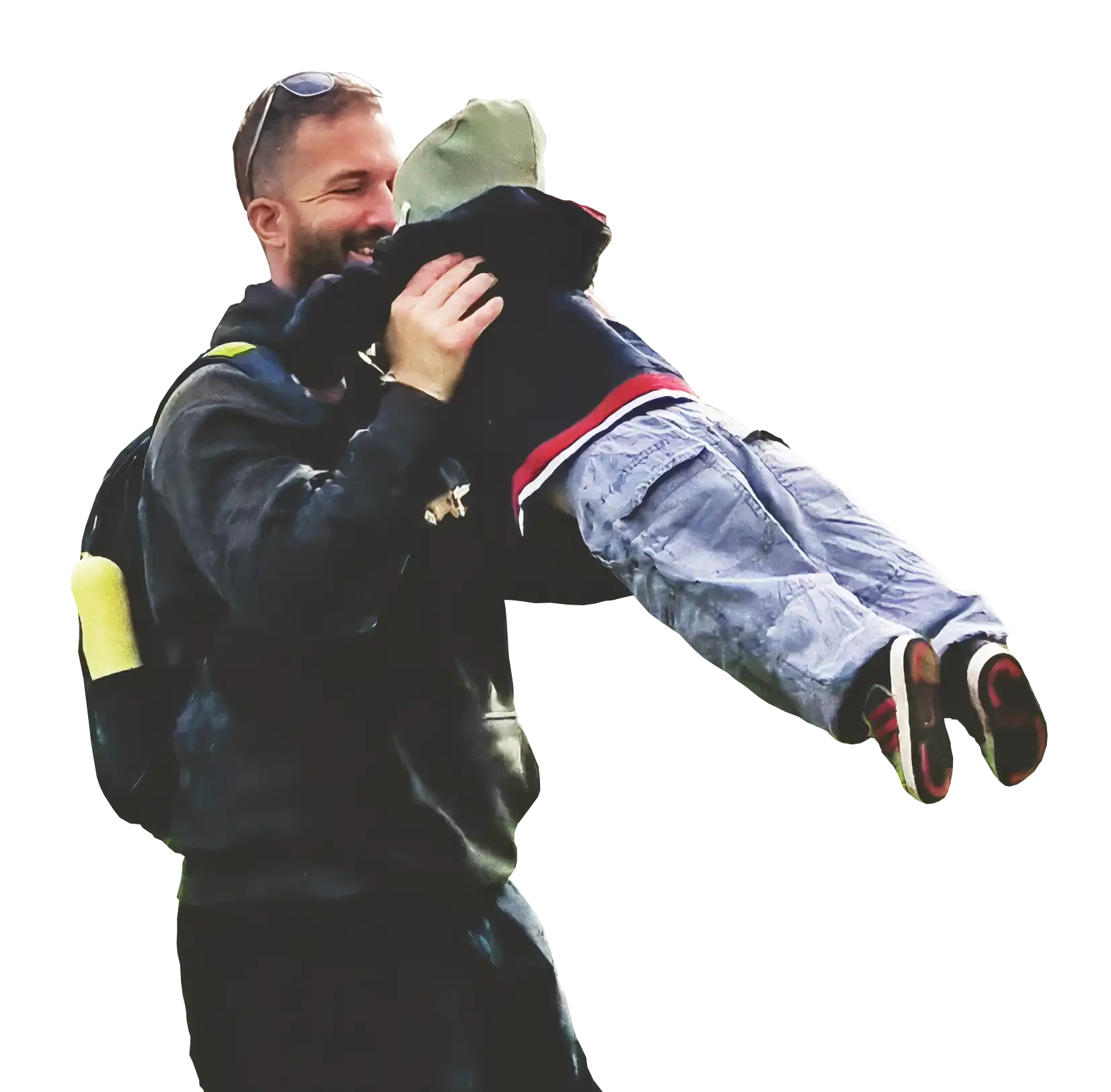
Thanks for visiting German at Heart!
I created this space to rediscover, celebrate, and pass on the parts of our culture that matter most. Things I learned from my parents, who you may know as Oma Gerhild and Pastor Wolle.
My hope is that this becomes a place where you can reconnect with your roots, share stories, and keep the spirit of family and tradition alive.
I invite you to follow along on social media as I share ideas, inspiration (and a few fun surprises along the way) as we continue exploring what it means to be German at heart!
Cheers!


Copyright © | German at Heart (Just like Oma) | A Fulson Media Group Inc. Brand | All Rights Reserved
Powered by: Make Your Knowledge Sell!
AFFILIATE DISCLOSURE: German at Heart is a brand of Fulson Media Group Inc., which participates in various affiliate advertising to provide a means to earn advertising fees by linking to retail websites. Additionally, this website is a participant in the Amazon Services LLC Associates Program, an affiliate advertising program designed to provide a means for sites to earn advertising fees by advertising and linking to amazon.com and affiliated sites. We do not promote products we do not own or would not buy ourselves. Our goal is to provide you with product information and our own personal opinions or ideas. At times, we will showcase services, programs, and products. We aim to highlight ones that you might find interesting, and if you buy future items from those companies, we may get a small share of the revenue from the sale. We are independently owned and the opinions expressed here are our own.
PHOTOGRAPHY: Throughout this site, you'll find mostly photos that we've taken. We also feature some reader-contributed images and curated stock IMAGES BY Deposit Photos and others, offering further perspectives on all things German.
YOU SHOULD ALWAYS PERFORM DUE DILIGENCE BEFORE BUYING GOODS OR SERVICES ONLINE.